Men Unstitched Suits – Premium Shalwar Kameez Fabric Online in Pakistan
Walking into a tailor's shop with fabric that fits your exact height, shoulder width, and personal style is a completely different experience than settling for whatever a ready-made rack happens to have in your size. Men unstitched suits give you that control, a continuous length of premium cloth cut and stitched entirely to your own measurements rather than a generic template. Munawer.Pk has spent decades supplying traditional and travel essentials to Pakistani families, and our unstitched suits for men collection is built on the same idea: source honest fabric, be upfront about quality, and let your tailor do the rest.
In this guide, you will find everything from what you actually get in each unstitched piece to choosing the right fabric for your season, pricing in Pakistan, honest customer reviews, and our open check policy.
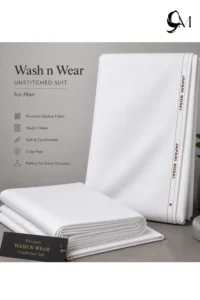
Table of Contents
-
Summary
-
What Are Men's Unstitched Suits?
-
Fabric Length, Width & What You Get in Each Piece
-
Bosky, Wool & Wash n Wear – Core Fabric Types
-
-
Why Choose Unstitched Fabric Over Ready-Made Suits
-
The Custom Fit Advantage
-
Tailoring Design Freedom – Collar, Daman & Pocket Choices
-
-
Which Unstitched Suit Fabric Is Right for You
-
Best Fabric by Season – Summer Cotton vs Winter Wool
-
Best Fabric by Occasion – Daily Wear, Office & Wedding Season
-
-
Understanding Fabric Quality Before You Buy
-
Checking Fabric Weight (GSM) to Avoid Thin or See-Through Cloth
-
Color-Fast Dyeing & Shrink Resistance Explained
-
-
How to Prepare and Care for Unstitched Fabric
-
The Pre-Shrink Step Every Buyer Should Know
-
Washing, Drying & Color Separation Dos and Don'ts
-
-
Features and Benefits of Munawer.Pk's Unstitched Suit Collection
-
Premium Cotton, Wash n Wear & Wool Benefits
-
Value and Longevity Compared to Fast-Fashion Ready-Mades
-
-
Why Pakistani Buyers Choose Munawer.Pk for Unstitched Suits
-
Original Fabric Sourcing & Quality Assurance
-
Cash on Delivery, Open Box Checking & After-Sales Support
-
-
What Our Customers Say About Munawer.Pk Unstitched Suits
-
Common Questions About Men's Unstitched Suits
-
Fabric, Fit & Tailoring Questions
-
Care, Shrinkage & Storage Questions
-
-
Buying Unstitched Suits in Pakistan – Price & Local Context
-
Unstitched Suit Price in Pakistan and What Affects It
-
Best Fabric Choices for Pakistan's Seasons and Eid/Wedding Demand
-
Summary
- Men's unstitched suits are 4 to 4.5 meter fabric lengths, in a standard 54 to 58 inch double width, meant to be custom-tailored into a full shalwar kameez rather than bought pre-sized.
- Core fabric types are cotton and wash and wear for summer and daily wear, and wool blends or heavier suiting for winter, with bosky reserved mainly for formal and wedding occasions.
- Checking a fabric's GSM (grams per square meter) before buying is the simplest way to avoid thin, see-through cloth, based on standard textile industry measurement.
- Pre-shrinking cotton fabric in cold water for 4 to 6 hours before tailoring prevents a tight fit after the first wash.
- Current competitive market pricing (2026): basic cotton/wash and wear roughly PKR 1,500–2,800, mid-range branded blends PKR 2,800–4,500, premium wool or bosky PKR 4,500–8,000+.
- Munawer.Pk offers Cash on Delivery, open box checking, and a 7-day return window from the date of delivery.
- Order ahead of Eid and wedding season, since tailor queues and fabric demand both spike sharply during these periods.
What Are Men's Unstitched Suits?
An unstitched men shalwar kameez is a single continuous length of fabric, cut to a standard size, meant to be taken to a tailor and stitched into a full shalwar kameez suit. It is the traditional starting point for Pakistani menswear, used far more widely than ready-made suits for everything from daily office wear to formal wedding events. A gents unstitched suit gives you the raw material, your tailor supplies the craftsmanship, and together they produce a fit no factory-sized garment can match.
Fabric Length, Width & What You Get in Each Piece
Each unstitched suit piece comes as 4 to 4.5 meters of fabric, with a standard double-width, locally called Bara Arz, spanning 54 to 58 inches. That gives your tailor enough room to cut a full adult shalwar and kameez without piecing together scraps or running short mid-cut. This is the same unstitched suit fabric for men standard used across most established fabric houses in Pakistan, so you know exactly what length you are paying for before it ever reaches the tailor's table.
Bosky, Wool & Wash n Wear – Core Fabric Types
Our gents unstitched fabric range covers the three types Pakistani men reach for most. Bosky offers a soft sheen and a more formal drape, best suited to weddings and special events rather than daily rough use. Wool blends bring warmth and structure for winter wear. Wash and wear, a polyester-viscose blend, holds a sharp crease and dries fast, making it the practical choice for anyone who wants a fresh look without daily ironing. Each gents unstitched cloth type serves a distinct purpose rather than one fabric trying to cover every season.
Why Choose Unstitched Fabric Over Ready-Made Suits
In our experience selling traditional menswear across Pakistan, the appeal of mens unstitched suits comes down to one simple frustration with ready-made sizing: collars that sit too tight, sleeves that run too long, or trousers that drop wrong on the leg. Unstitched suits pakistani buyers pick specifically to avoid that guesswork entirely.
The Custom Fit Advantage
Every body is built differently, and standard retail sizing simply cannot account for that variation the way a personal tailor can. Male unstitched suits are cut and stitched to your exact shoulder width, chest, arm length, and preferred trouser drop, producing a fit that a factory-sized medium or large almost never achieves.
Tailoring Design Freedom – Collar, Daman & Pocket Choices
Beyond fit, unstitched fabric hands you full control over the design itself. You can choose a round or straight bottom hem, add hidden pockets, or request a structured sherwani-style collar, decisions a ready-made rack simply does not offer. This is part of why premium unstitched suits remain the standard for weddings and formal events, where buyers want the best unstitched suits built around a specific look rather than whatever happens to be in stock. Don't forget a quality shalwar drawstring (nara/azarband) for your shalwar.
Which Unstitched Suit Fabric Is Right for You
Choosing between fabric types comes down almost entirely to season and occasion, and after years of helping customers pick the right cloth, the same two questions come up first: when will you wear it, and how often.
Best Fabric by Season – Summer Cotton vs Winter Wool
For hot weather, unstitched cotton suits made from breathable, long-staple cotton keep air moving and absorb sweat quickly, which matters during long summer afternoons or outdoor Eid gatherings. Pure cotton unstitched suits in lighter Latha weaves work especially well for daytime office wear. For winter unstitched suits, heavier blended suiting or woolen blends hold body heat and resist wind, making them the better pick for cold morning functions or outdoor evening wedding dinners. See our winter jubba styles for a similar warm silhouette.
Best Fabric by Occasion – Daily Wear, Office & Wedding Season
Daily wear and office settings generally suit wash and wear fabric best, since it holds a crisp look through long hours without demanding constant ironing. For weddings and formal events, bosky or fine wool blends offer a more refined drape suited to the occasion. Trending unstitched suits each season tend to follow this same split, with the latest design of unstitched suits usually appearing first in bosky and premium wash and wear lines rather than basic cotton. Explore our thobe collection as an alternative traditional look.
Understanding Fabric Quality Before You Buy
Not all unstitched fabric marketed as premium actually holds up the same way once it is stitched and worn regularly, which is why checking a few specific details before buying matters more than the price tag alone.
Checking Fabric Weight (GSM) to Avoid Thin or See-Through Cloth
Fabric weight, measured in GSM or grams per square meter, tells you how dense a cloth actually is before you buy it. GSM measures how many grams a one-meter by one-meter piece of fabric weighs, independent of fiber type or width, and most apparel fabric falls somewhere between 90 and 300 GSM, according to a textile industry guide. For anyone comparing the best unstitched suits for men's in Pakistan, checking this figure online before ordering is the simplest way to avoid a thin, limp cloth that turns see-through under bright sunlight.
Color-Fast Dyeing & Shrink Resistance Explained
Color-fast dyeing means the fabric's color is chemically bound to resist fading or bleeding, even after repeated wash cycles. This matters most with a black unstitched suit, which can otherwise dull and pick up lint quickly, and a white unstitched suit, which can yellow unevenly without the right finishing treatment. Quality fabric holds its original tone wash after wash rather than fading within the first few months.
How to Prepare and Care for Unstitched Fabric
Getting the best result from unstitched suits pakistan buyers order starts before the fabric even reaches the tailor, not after the suit is stitched.
The Pre-Shrink Step Every Buyer Should Know
Cotton fabric naturally contracts the first time it gets fully wet, which is why soaking your unstitched cotton fabric in cold water for 4 to 6 hours before handing it to your tailor matters. Skipping this step is one of the most common reasons a freshly stitched suit feels noticeably tighter after its first wash, since the fabric shrinks after the cut has already been made rather than before. Official guidance on textile care and shrinkage standards.
Washing, Drying & Color Separation Dos and Don'ts
Always wash pure white and deep black suits completely separately to prevent stray lint or dye transfer between fabrics. Dry your suits in partial shade rather than direct sunlight, since harsh sun exposure can bleach black dyes and weaken cotton fibers over repeated washes. Small habits like these add years to a suit's usable life. Hang your fabric to dry properly with sturdy clothes hangers.
Features and Benefits of Munawer.Pk's Unstitched Suit Collection
Every fabric type in our collection is chosen to match a real season or occasion rather than sold as one generic option that claims to work for everything.
Premium Cotton, Wash n Wear & Wool Benefits
Our unstitched cotton suits online pakistan range uses long-staple cotton for genuine breathability, while our cotton unstitched salwar suits in wash and wear hold a pressed look through full working days without needing an iron. Winter wool blends round out the range for cold-weather formal wear, giving buyers a complete seasonal wardrobe from one source. Pair with Keffeiyah and agal for a Middle Eastern outfit.
Value and Longevity Compared to Fast-Fashion Ready-Mades
Premium raw fabric weaves generally outlast mass-produced, fast-fashion garments, since the material itself is heavier and better constructed from the start. A well-chosen unstitched suit, properly pre-shrunk and cared for, can be worn for years without the seams or fabric breaking down the way cheaper ready-made stitching often does.
Why Pakistani Buyers Choose Munawer.Pk for Unstitched Suits
Decades spent sourcing traditional and travel essentials as a family owned business has taught us which fabric mills actually deliver consistent quality batch after batch, which is exactly what we look for before listing anything as the best online site for unstitched suits pk shoppers can rely on.
Original Fabric Sourcing & Quality Assurance
Every pakistani unstitched suits listing on our site is checked for weave consistency, colorfastness, and correct fabric length before it goes up for sale, not simply sourced and uploaded without review. That same standard applies whether the fabric is a basic cotton or a premium bosky weave.
Cash on Delivery, Open Box Checking & After-Sales Support
You can order unstitched suits for mens with Cash on Delivery and open box checking, so you can feel and inspect the fabric before paying. If anything about your delivery is not right, our policy is direct: "You can request a return within 7 days from the date of delivery," and our support team is reachable on WhatsApp for anyone who has questions before or after ordering. Browse more trusted essentials with COD across our Hajj & Umrah range.
What Our Customers Say About Munawer.Pk Unstitched Suits
Real feedback from people who buy from our best unstitched suits for men collection regularly, shared here with their permission.
"Got the wash and wear fabric for my office suits, and it genuinely stays crisp even after sitting all day. Fabric feels heavy and well woven, not thin like some other online orders I have gotten before." — Bilal A., Islamabad
"Order kiya tha wool fabric for winter, orignal quality hai and warm enough for early morning drives. Open box checking se pehle hi confidence mil gaya delivery pe." — Imran K., Karachi
"Bought black fabric for Eid stitching, tailor said it was easy to cut and the color did not run in the first wash. Very very happy with the pre-shrink instructions too." — Sana R., Lahore
Common Questions About Men's Unstitched Suits
Fabric, Fit & Tailoring Questions
Q: How much fabric do I need for one shalwar kameez?
A: A standard unstitched suit piece is 4 to 4.5 meters, which is enough for a full adult shalwar and kameez from most standard fabric widths.
Q: What is the difference between bosky and wash and wear?
A: Bosky has a soft sheen suited to formal occasions, while wash and wear is a wrinkle-resistant blend better suited to daily and office wear.
Q: Can I request a specific collar or pocket style with unstitched fabric?
A: Yes, since the fabric is unstitched, your tailor can cut and stitch it to any collar, daman, or pocket style you request.
Care, Shrinkage & Storage Questions
Q: Do I really need to pre-shrink cotton fabric before stitching?
A: Yes, soaking cotton fabric in cold water for 4 to 6 hours before your tailor cuts it prevents the suit from feeling too tight after its first wash.
Q: Can I wash black and white unstitched suits together?
A: No, washing them separately prevents lint transfer onto black fabric and keeps whites from picking up any stray dye.
Q: What exactly are unstitched suits for men and what do they typically include?
A: An unstitched suit for men is a fabric bundle — sold as raw, unhemmed cloth — that contains all the material needed to have a complete traditional Pakistani outfit made by a tailor according to the buyer's exact measurements and style preferences. Rather than purchasing a ready-made garment in a standard size, the buyer selects the fabric they want, takes it to a tailor (darzi), and has it cut and stitched to their specific body measurements and style requirements.
Q: What does an unstitched suit piece contain and how many meters of fabric does it include?
A: A standard men's unstitched suit piece contains:
For a two-piece shalwar kameez:
- Kameez fabric: Approximately 2 meters — sufficient for the full-length kameez from shoulder to below the knee with standard seam allowances
- Shalwar fabric: Approximately 2 meters — for the full shalwar with adequate fullness and length
Total two-piece: 4 to 4.5 meters typically
For a three-piece (kameez and shalwar):
- Kameez: 2 to 2.25 meters
- Shalwar: 2 to 2.25 meters
- Total: Approximately 4 to 4.5 meters
For a kurta pajama set:
- Kurta: 2 to 2.25 meters (shorter length than full kameez)
- Pajama: 2 to 2.25 meters
- Total: Approximately 4 to 4.5 meters
Q: What types of fabrics are commonly available for men's unstitched suits?
A:
Cotton:
The most widely used fabric for everyday Pakistani men's unstitched suits; breathable, affordable, and comfortable in Pakistan's warm climate; available in various weave weights from lightweight summer cotton to heavier winter weights
Wool/Woolen blends:
For winter formal wear; pure wool for premium quality; wool-polyester blends for affordability and easier maintenance; available in various weights for different winter severity levels
Silk and silk blends:
Silk is haram for men
Wash n wear Polyester and blended fabrics:
Lower cost options; more wrinkle-resistant than natural fibers; easier care but less breathable in Pakistan's heat
Q: What are the benefits of choosing cotton unstitched suits for men?
A: Cotton dominates Pakistani men's unstitched suit choices for compelling practical reasons:
Climate appropriateness:
Pakistan's climate — hot summers exceeding 40°C in most cities, warm monsoons, and moderate winters in southern regions — makes cotton's breathability and moisture absorption the most practically important fabric quality for daily wear. Cotton allows air circulation against the skin and absorbs perspiration without retaining it against the body the way synthetic fabrics do.
Skin comfort:
Cotton is hypoallergenic, soft against the skin, and doesn't generate static electricity — making it comfortable for all-day wearing, particularly during the long physical activities of daily Pakistani life
Versatility:
Cotton unstitched suits are appropriate for virtually all casual and semi-formal occasions; they accept both simple and elaborate embroidery; they can be styled formally or casually depending on the cut and finishing
Care ease:
Cotton is machine washable, tolerates frequent washing without degrading, and is straightforward to iron and maintain — practical for a daily-wear garment
Affordability:
As a domestic crop processed by Pakistan's massive textile industry, cotton unstitched suits are available at a very wide price range — from very affordable to premium quality depending on the thread count and finishing
Health and skin benefits:
For men with sensitive skin conditions, eczema, or heat rashes — very common in Pakistan's summer climate — cotton's natural breathability and absence of synthetic compounds significantly reduces skin irritation compared to synthetic alternatives
Q: Why should you opt for pure cotton when choosing an unstitched suit?
A: Pure cotton (100% cotton, not a cotton-polyester blend) provides specific advantages over blended alternatives:
Superior breathability:
Polyester fibers in blended fabrics create a partial barrier to air circulation; pure cotton maintains full fiber breathability across the entire fabric surface
Better moisture management:
Pure cotton absorbs up to 27 times its weight in moisture and wicks it to the surface for evaporation; polyester blends retain moisture against the body
Aging and quality:
Pure cotton fabric softens and improves in feel with each wash; polyester blends may pill, develop static, and lose texture over time
Dyefastness and appearance:
High-quality pure cotton holds dye vibrantly and maintains color fidelity over years of washing in ways that many blended fabrics don't
Environmental and health consideration:
Pure cotton is biodegradable and free from the microplastic shedding associated with polyester content — an increasingly relevant consideration
Legitimate limitation: Pure cotton wrinkles significantly more than polyester blends — a relevant practical consideration for men who need their suit to maintain a sharp appearance throughout a long workday without ironing opportunities.
Q: What fabric is best suited for men's unstitched suits during winter?
A: Pakistan's winter varies dramatically by region — Karachi experiences a mild, pleasant winter rarely below 10°C, while Lahore, Islamabad, and Peshawar experience genuine cold with temperatures dropping to 2 to 5°C, and northern areas experience severe winter cold. Fabric choice should match regional winter severity:
For mild winter (Karachi, Hyderabad, coastal areas):
- Khaddar — the ideal mild-winter fabric; heavier than summer cotton but not heavy enough for the severe cold of northern Pakistan; traditional and widely available
- Washing/Karandi — medium weight; appropriate for Karachi's winter when a light additional layer feels comfortable
For moderate to cold winter (Lahore, Multan, Islamabad, Peshawar):
- Wool-cotton blend — provides warmth while retaining some cotton breathability; more comfortable for indoor-outdoor movement
- Thick khaddar — heavyweight hand-woven khaddar provides excellent natural insulation
- Flannel — soft-brushed cotton or wool-cotton blend with excellent insulating properties; very popular for traditional Pakistani winter shalwar kameez
- Latha/thick cotton twill — affordable winter option for everyday wear
For severe cold (Gilgit-Baltistan, AJK, northern KPK, mountainous regions):
- Pure wool (tweed or worsted) — provides genuine warmth for outdoor use in severe cold
- Wool blend — wool-polyester combinations offering warmth with improved shape retention
- Velvet (for formal occasions) — a traditional Pakistani formal winter fabric for weddings and formal events; provides warmth with luxury appearance
Q: What are the latest trending designs in men's unstitched suits?
A: Pakistani men's fashion has evolved significantly in recent years while maintaining its traditional foundations:
Current design trends:
Tonal embroidery:
Embroidery in the same color family as the base fabric — subtle but sophisticated; replacing the high-contrast embroidery of earlier decades for everyday wear; particularly popular in off-white on white, charcoal on grey, and navy on navy combinations
Geometric and abstract prints:
Moving beyond traditional floral patterns; geometric block prints, abstract brushstroke-inspired designs, and modern interpretations of traditional ajrak patterns gaining popularity among younger Pakistani men
Minimalist solid colors:
A significant counter-trend to ornate embroidery; clean, well-tailored unstitched suits in solid colors with subtle texture rather than surface decoration — reflecting the influence of contemporary global menswear aesthetics
Structured kurta cuts:
Kurta designs inspired by contemporary fashion — mandarin collar (Chinese collar) kurtas, kurtas with structured front panels, and kurtas with subtle Western tailoring details at the collar and cuff
Revival of traditional regional designs:
Sindhi ajrak-inspired prints, Balochi embroidery elements, and Punjabi phulkari-influenced designs gaining appreciation as expressions of Pakistani cultural identity
Two-tone and color-block designs:
Contrasting fabric sections — a different colored yoke, contrasting placket, or complementary sleeve fabric — adding visual interest without embroidery
Earth tones and muted color palette:
Terracotta, sage green, dusty rose, mustard, and warm browns replacing the previously dominant bright colors in everyday Pakistani men's fashion
Q: What are the most popular and latest designs available in men's unstitched suits?
A: (Already answered above.)
Q: What makes a men's unstitched suit premium quality and worth the price?
A: Premium quality in men's unstitched suits is determined by several factors that justify higher price points:
Fiber quality:
- Thread count — higher thread count cotton produces finer, smoother, more durable fabric
- Fiber length — long-staple cotton (Egyptian, Pima, or Pakistani long-staple varieties) produces stronger, softer, and more lustrous fabric than short-staple cotton
- Pure fiber percentage — 100% natural fiber versus blended; premium suits use pure cotton, pure linen, or pure wool without synthetic blending
Weave quality:
- Tighter, more even weave structure with fewer irregularities
- Consistent thread density across the full fabric width
- Freedom from weave defects — slubs, dropped threads, uneven density
Dyeing quality:
- Reactive dyes that penetrate fiber structure rather than coating the surface — more colorfast, more vibrant, and maintains appearance through repeated washing
- Even dye distribution with no streaking or patchy color variation
- Colorfast to washing, rubbing, and light — tested to prevent color transfer
Finishing:
- Proper shrinkage pre-treatment (sanforization) — reduces post-purchase shrinkage that changes garment dimensions after first wash
- Smooth, even surface finish without pilling or loose fiber ends
Embroidery quality (for embroidered suits):
- Thread quality — premium rayon or silk thread versus cheaper synthetic
- Stitch density and evenness
- Clean backing without excessive thread bulk that stiffens the fabric
Branding and authenticity:
- Established brands like Gul Ahmed, Al-Karam, Chenab, and Sana Safinaz maintain consistent fabric quality standards and provide quality assurance that unbranded fabric cannot
Q: How do you choose the best unstitched suit for men based on fabric and occasion?
A: Occasion-appropriate fabric selection is the core of Pakistani men's dress sense:
Everyday office and work wear:
- Fabric: Medium-weight cotton or cotton-linen blend
- Design: Solid colors or subtle prints; minimal embroidery
- Color: Navy, grey, white, cream, olive — conservative professional palette
- Tailoring: Simple kameez with a straight hem, classic collar, and practical pockets
Casual everyday use:
- Fabric: Lawn (summer) or khaddar (winter)
- Design: Any print or pattern you enjoy; doesn't need to be formal
- Tailoring: Any comfortable cut; kurta style is appropriate for casual settings
Wedding guest (as a guest, not the groom):
- Fabric: Silk blend, fine cotton voile, or wool blend (winter weddings)
- Design: Embroidered or in a rich solid color; three-piece with waistcoat elevates the formality
- Color: Rich tones — deep green, burgundy, navy, camel; avoid white and very pale colors (traditionally reserved for the groom)
Groom's wedding outfit:
- Fabric: Premium silk, raw silk, or fine wool blend
- Design: Heavily embroidered sherwani or three-piece; coordinated with bridal party color palette
- Color: Traditional ivory/cream, gold, deep red, or as per the couple's chosen palette
Eid celebrations:
- Fabric: Fine cotton or silk blend
- Design: New, celebratory color; embroidery acceptable; should feel festive
- Color: Light, celebratory colors — white, off-white, pastels, or bright traditional tones
Business formal meetings:
- Fabric: Fine cotton, linen, or light wool blend
- Design: Clean, professional; minimal embroidery or none
- Color: Conservative — white, navy, grey, light blue
Q: What are the advantages of buying branded unstitched suits over unbranded ones?
A: Branded unstitched suits from established Pakistani textile houses offer specific verifiable advantages:
Consistent quality standards:
- Branded mills maintain quality control processes that ensure fabric weight, thread count, and dye quality meet stated specifications batch to batch
- Unbranded fabric quality varies significantly — two pieces that look similar may have very different durability and wash performance
Accurate fabric composition labeling:
- Established brands clearly state cotton percentage, fabric weight, and care instructions
- Unbranded fabric is often mislabeled — "pure cotton" fabric from informal markets frequently contains significant polyester content that only becomes apparent when the fabric pills or retains body heat unlike real cotton
Shrinkage pre-treatment:
- Premium Pakistani brands pre-treat fabric for shrinkage so the garment retains its tailored dimensions after washing; unbranded fabric often hasn't undergone this process
Design originality:
- Branded collections offer unique, season-specific designs that won't be duplicated across the market; popular unbranded designs are quickly copied and distributed widely
After-purchase support:
- Branded purchases from authorized retailers come with some recourse if fabric quality doesn't match description; informal market purchases offer no such protection
Resale value:
- Branded unstitched suits (particularly premium Pakistani brands) retain some resale value; unbranded fabric has negligible resale market value
Top Pakistani brands for men's unstitched suits: Gul Ahmed, Al-Karam, Sana Safinaz Men, Chenab Fabrics, Ideas (Gul Ahmed), Junaid Jamshed (J.), Sapphire, and Charcoal for premium contemporary menswear.
Q: What is the difference between stitched and unstitched suits?
A:
Stitched suits:
- Fully assembled, ready-to-wear garments in standard sizes (S, M, L, XL or specific chest/waist measurements)
- Can be purchased and worn immediately
- Convenient but limited to available sizes — doesn't accommodate the significant body proportion variation in Pakistani men (some have broader shoulders with slim waists, some have non-standard height-to-torso ratios, etc.)
- What you see is what you get — design, collar, cut, and dimensions are fixed
- Increasingly available from Pakistani fashion brands for both casual and formal wear
Unstitched suits:
- Raw fabric bundle requiring tailoring
- Fully customizable to exact body measurements — the most important advantage for achieving proper fit
- Any collar style, hem length, pocket design, sleeve style, or silhouette can be specified
- Requires time (typically 1 to 2 weeks at a tailor) and tailoring cost beyond the fabric price
- The traditional Pakistani menswear purchasing format that remains dominant
- Better fit for the price since tailoring compensates for individual body proportions
When to choose stitched: When convenience and immediate availability are priorities; for casual basics; when travel prevents waiting for tailoring
When to choose unstitched: For formal occasions where fit matters significantly; for individuals with non-standard body proportions; when specific design customization is desired; for the best value per quality when tailoring cost is considered alongside fabric price
Q: How do you get an unstitched suit stitched?
A: The process of converting unstitched fabric into a finished suit involves several steps:
Finding a tailor:
- Local darzi (neighborhood tailor) — the most common option; present in virtually every Pakistani residential area; affordable and accessible; quality varies significantly
- Boutique tailor — higher quality, more design-conscious; typically in commercial areas of major cities; higher cost
- Brand-affiliated tailors — some Pakistani fabric brands have associated tailoring services or can recommend tailors familiar with their fabric
Taking measurements:
A good tailor will measure:
- Chest circumference
- Shoulder width
- Sleeve length from shoulder to wrist
- Kameez length from shoulder to desired hem point
- Neck circumference and collar size
- Shalwar waist measurement
- Hip circumference
- Shalwar length from waist to ankle
Specifying design details:
- Collar style (Chinese collar, traditional kurta collar, band collar, spread collar)
- Pocket design (chest pocket, side pockets, patch or in-seam)
- Sleeve style (full, three-quarter, or short)
- Kameez silhouette (straight cut, A-line flare, fitted)
- Shalwar style (traditional wide, churidar, Pakistani straight cut)
- Embellishments (piping, buttons, thread detailing)
Timeline: Standard tailoring typically takes 5 to 14 days; urgent tailoring (often at premium cost) in 2 to 3 days at most tailors
Q: How much fabric is needed for a shalwar kameez?
A: (Already answered in detail — refer to "What does an unstitched suit piece contain and how many meters of fabric does it include?" above. Standard two-piece: 5.5 to 6.5 meters total; three-piece: 6.5 to 7.5 meters.)
Q: What is the best fabric for summer unstitched suits?
A: (Already answered — lawn (ultra-lightweight fine cotton) is the best fabric for peak Pakistani summer; standard cotton and linen are excellent for the warmer months of the year more broadly. Refer to "What fabric is best suited for men's unstitched suits during winter?" for the complete seasonal guide.)
Q: How do you measure for unstitched suits?
A: (Already answered — refer to "How do you get an unstitched suit stitched?" for the complete measurement list. The key measurements are chest, shoulders, sleeve length, kameez length, neck size, waist, hip, and shalwar length.)
Q: What is the difference between lawn and cotton unstitched suits?
A: Lawn is a type of cotton — the distinction is within the cotton family rather than between different fiber types:
Lawn:
- An ultra-fine, plain-weave cotton fabric with a very high thread count
- Very lightweight — typically 60 to 80 grams per square meter
- Almost translucent in finer grades — may require an inner lining
- Smooth, silky hand feel despite being cotton
- Excellent for extreme heat — June through August in most Pakistani cities
- Higher price than standard cotton for equivalent quality due to finer manufacturing requirements
- Associated with premium summer collections from major Pakistani brands
Standard cotton unstitched fabric:
- Broader category covering a range of cotton weave types and weights
- Can range from lightweight poplin (similar to lawn but slightly heavier) to medium-weight cotton twill and heavier cotton canvas
- More opaque than fine lawn
- More durable and less prone to the transparency issues of fine lawn
- Better for year-round use as the heavier weights are more appropriate for cooler months
- More affordable across the range than premium lawn
Practical guidance: Choose fine lawn for the hottest months (May to August); standard cotton for March, April, September, and October; and move to heavier cotton or khaddar for the winter months.
Q: How do you choose an unstitched suit for a wedding?
A: (Already answered in "How do you choose the best unstitched suit for men based on fabric and occasion?" — refer to the wedding guest and groom sections for complete guidance.)
Q: What are the unstitched suit care and washing tips?
A: Proper care extends the life and appearance of your fabric and finished suit:
Before stitching (fabric care):
- Store unstitched fabric folded in a clean, dry place away from direct sunlight — light degrades dye
- Some tailors recommend pre-washing fabric before cutting to allow for any shrinkage — particularly important for khaddar and unprocessed cotton that hasn't been sanforized
Washing the finished suit:
- First wash: Wash separately in cold water — some dye bleeding on the first wash is normal; washing with similar colors prevents any bleeding from transferring to other garments
- Temperature: Cold or lukewarm water (30°C maximum for most cotton); hot water causes shrinkage and dye fading
- Detergent: Use mild detergent; avoid harsh bleaching agents that damage cotton fibers over time
- Machine vs hand wash: Most Pakistani cotton and lawn suits can be machine washed on a gentle cycle; heavily embroidered suits should be hand washed or dry-cleaned to protect embroidery
- Avoid soaking: Don't leave cotton suits soaking for extended periods — increases likelihood of color bleeding and fiber weakening
Drying:
- Hang to dry rather than machine drying — machine dryers cause shrinkage and can weaken fabric over time
- Dry in shade rather than direct intense sunlight — UV light fades colors
- Hang by the shoulders rather than the hem to maintain shape
Ironing:
- Iron cotton and lawn while slightly damp for the best results
- Use appropriate heat setting for the fabric type
- Iron embroidered areas from the reverse side to protect the embroidery
Q: What are the fabric trends and styles in men's unstitched suits in Pakistan?
A: (Already answered — refer to "What are the latest trending designs in men's unstitched suits?" for the complete current trend overview including tonal embroidery, geometric prints, minimalist solids, and earth tone color palettes.)
Q: What is the typical cost of tailoring a three-piece unstitched suit in Pakistan?
A: Tailoring costs vary significantly by city, neighborhood, and tailor quality:
Basic neighborhood tailor (local darzi):
- Simple two-piece shalwar kameez: Rs. 1300+
- Three-piece with waistcoat: Rs. 2000+
- Suitable for everyday casual suits
Mid-range established tailor:
- Two-piece: Rs. 1,800 to Rs. 3,500
- Three-piece: Rs. 2,500 to Rs. 5,000
- Better finish, more design options, more reliable sizing
Premium boutique tailors (major cities):
- Two-piece: Rs. 4,000 to Rs. 10,000+
- Three-piece formal: Rs. 8,000 to Rs. 20,000+
- High-end finish suitable for wedding and formal occasions
City variations:
- Lahore and Karachi: Wider range; highest quality tailors charge more than smaller cities
- Islamabad/Rawalpindi: Similar to Lahore pricing
- Smaller cities and towns: Significantly lower tailoring costs with comparable local quality
What affects tailoring cost:
- Complexity of design and number of style features
- Timeline — urgent tailoring costs 20 to 50% more
- Embellishments — adding piping, buttons, or fabric detailing adds cost
- The tailor's reputation and location (commercial vs residential area)
Q: What are the different types of unstitched wool suit fabrics available in Pakistan?
A: Wool and wool-blend unstitched fabrics for Pakistani men's winter suits come in several distinct types:
Pure wool suiting:
- Worsted wool — fine, smooth surface; used for formal suits and business wear; excellent drape and shape retention
- Tweed — heavier, textured weave; traditional and warm; more casual character; popular for winter khaddar-alternative formal suits
- Flannel — soft, slightly brushed surface; warm and comfortable; popular for winter shalwar kameez in Punjab and KPK
Wool blends:
- Wool-polyester blend (55/45 or 65/35) — most affordable wool option; wrinkle-resistant; easier care than pure wool; some compromise in breathability and natural feel
- Wool-cotton blend — better breathability than wool-poly; maintains much of wool's warmth with cotton's comfort against skin; popular for transitional season formal wear
- Wool-viscose blend — adds drape and softness to wool; often used in premium suiting fabrics
Available in Pakistan:
- Domestic wool fabric production is primarily in KPK and northern regions where wool is locally sourced; imported wool suiting fabrics are available through fabric wholesale markets in Lahore (Hall Road area) and Karachi (Jodia Bazaar)
- Price range: Rs. 800 to Rs. 5,000+ per meter depending on wool percentage and quality
Q: How do you choose the perfect unstitched suit fabric for a formal event?
A: (Already answered — refer to "How do you choose the best unstitched suit for men based on fabric and occasion?" for the complete occasion-based guidance. For formal events specifically: the fabric should be appropriate for the season, the design should match the formality level of the occasion, and quality indicators like even weave, vibrant dye, and appropriate weight for the season should all be verified before purchase.)
Q: What are the options for unstitched suit fabric suitable for business casual attire?
A: Business casual in Pakistani professional contexts typically means a well-tailored shalwar kameez or kurta pajama in a conservative but not necessarily plain fabric:
Best fabric choices for business casual:
- Fine cotton poplin — lightweight but substantial enough to hold a sharp press; appropriate for air-conditioned offices
- Cotton-linen blend — the professional summer fabric par excellence; breathable, well-structured, and carries a slightly textured appearance that reads as intentionally styled rather than casual
- Light wool blend (for winter) — warm, professional, and well-structured; the winter business casual standard
Design guidance for business casual:
- Solid colors or very subtle self-stripe (tonal stripe woven into the fabric)
- Minimal or no embroidery — if embroidered, very subtle tonal embroidery on the placket or collar only
- Conservative colors: white, off-white, light blue, light grey, navy, or sage green
- Clean tailoring with classic collar — Chinese collar or simple kurta collar
What to avoid for business casual:
- Heavily embroidered designs that read as wedding or formal occasion wear
- Very bright or bold colors
- Thin fabrics without proper lining that appear see-through indoors
Buying Unstitched Suits in Pakistan – Price & Local Context
Unstitched suit price in Pakistan varies significantly depending on fabric type, with cotton and wash and wear sitting at the more affordable end and premium wool or bosky weaves priced higher.
Unstitched Suit Price in Pakistan and What Affects It
As a general competitive market guide for 2026, basic cotton and wash and wear unstitched suits typically range from around PKR 1,500 to 2,800, mid-range branded cotton and wash and wear blends run roughly PKR 2,800 to 4,500, and premium wool blends or bosky weaves generally fall between PKR 4,500 and 8,000, with authentic boski sometimes priced higher. <cite index="2-1">Quality branded fabric for a full suit cut generally starts from around Rs. 2,450, with premium suiting typically ranging from Rs. 3,500 to Rs. 7,000</cite>, which lines up closely with current market rates across established Pakistani fabric brands. At Munawer.Pk, our pricing is transparent, what you see is what you pay, with no hidden charges, though always check the current listing for the exact price. For pakistani unstitched suits wholesale or unstitched suits wholesale bulk orders, contact our support team directly for volume pricing.
Best Fabric Choices for Pakistan's Seasons and Eid/Wedding Demand
Pakistan's sharp seasonal shift, from intense summer heat to cold winter mornings, means the right fabric changes twice a year for most buyers. Winter unstitched suits for men in wool or heavy blended suiting suit the cold months, while lighter mens shalwar kameez unstitched cotton options take over for summer. Demand for both spikes heavily around Eid and wedding season, so ordering a few weeks ahead of tailor queues filling up is generally the safer choice.
Choosing the right unstitched suit comes down to matching fabric to season and occasion, cotton or wash and wear for daily comfort, bosky for formal events, and wool blends for winter warmth. Munawer.Pk brings the same sourcing discipline we apply across our traditional and travel essentials to every meter of men unstitched suits fabric we sell, and our team is happy to help you choose the right one. Explore the collection today and let your tailor bring your exact fit to life.
Written by Fakher Senior Search Analyst — Munawer.Pk
