



Tayammum Box — Perform Dry Ablution Anywhere, Anytime
Millions of Pakistani pilgrims arrive in Saudi Arabia fully prepared for Hajj, yet many face the same moment of panic in Muzdalifah at Fajr time: no water within reach, a crowd of two million people around them, and the obligation of Salah that cannot wait. Finding clean natural earth in a paved, floodlit outdoor gathering is harder than it sounds. This is exactly the situation a compact tayammum clay block was made for, and yet it remains one of the most commonly forgotten items in a Pakistani Hajj kit.
Tayammum Ki Mitti — Pure Clay for Valid Dry Ablution
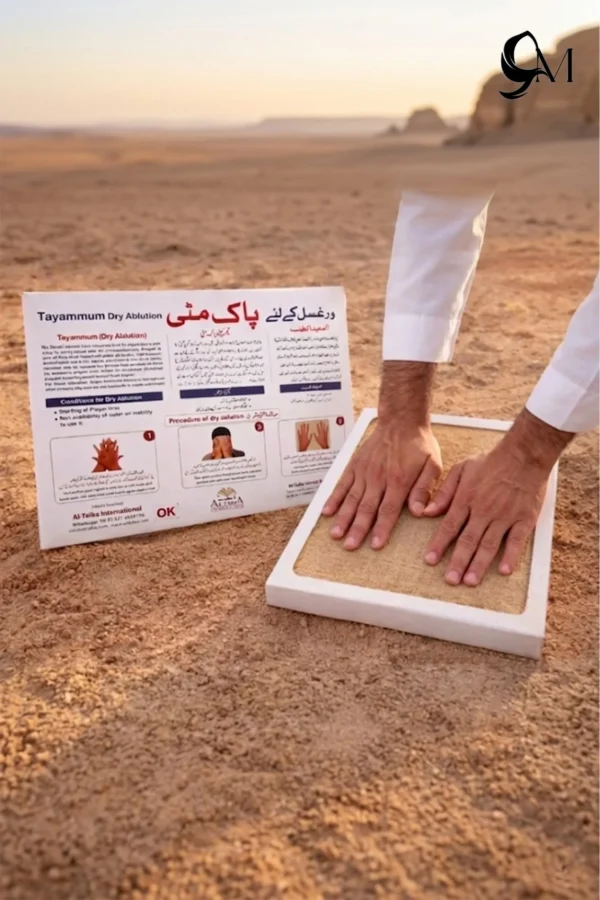
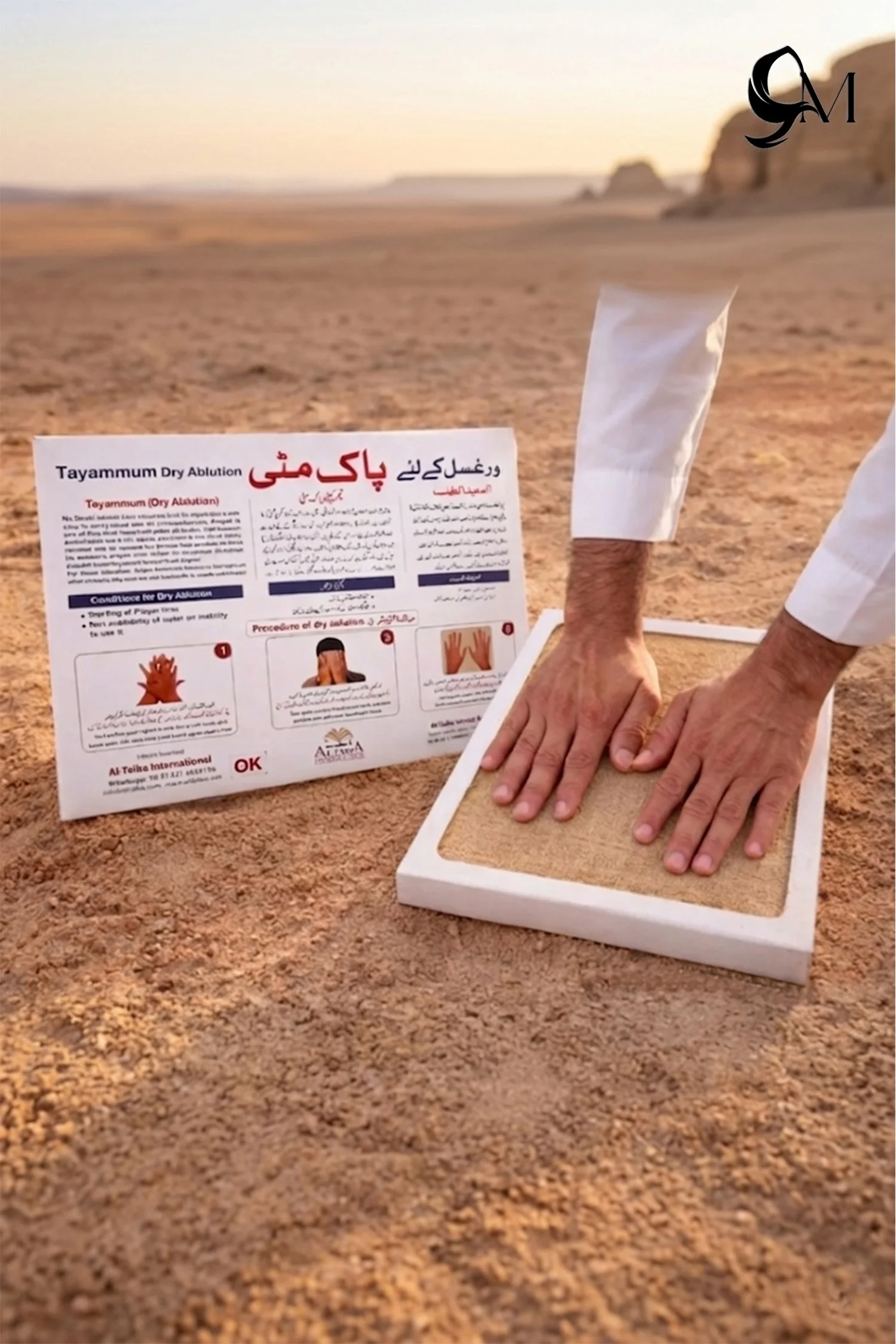
This tayammum box contains a block of 100% pure natural clay sourced from clean earth, free from impurities, chemicals, and added fragrances, making it fully valid for tayammum dry ablution according to all four Sunni madhabs. Performing dry ablution with this clay requires two simple strikes of the palm, followed by wiping the face and hands, the same method prescribed in the Quran and demonstrated in the Sunnah, completing the entire tayammum for namaz process in under a minute. The protective box keeps the tayammum clay completely clean and dry throughout your travel, and the block is reusable for many sessions across an entire Hajj trip without significant depletion.
Tayammum Mud for Muzdalifah, Hospital, Travel, and Home
Picture completing Fajr prayer in Muzdalifah with complete peace of mind, your tayammum kit already in your Ihram pouch, no searching for clean soil in the dark, no anxiety about missed Salah, just a calm and valid act of worship performed exactly as prescribed. Beyond Hajj, this tayammum sand block serves sick or hospitalised Pakistani Muslims who cannot use water due to wounds, surgical casts, or extreme weakness, elderly family members for whom regular wuzu has become physically difficult, and travelers on long international flights where wuzu is genuinely inconvenient. The tayammum mati is naturally odourless, safe for all skin types, and lightweight enough to fit in a small zip-lock bag inside any travel pouch without adding noticeable weight to your luggage. Pakistani scholars and Hajj preparation guides consistently recommend carrying tayammum soil as a non-negotiable essential, particularly for the nights of Mina and Muzdalifah, and it is increasingly included in Hajj farewell gift hampers alongside miswak, tasbeeh, and unscented soap. One block handles an entire trip, and the peace of mind it provides is worth far more than the space it occupies.
Tayammum Stone for Sale
Order your tayammum ki mitti online from Munawer.Pk today, with Cash on Delivery and fast delivery across Pakistan. Your Salah should never have to wait because water was not within reach, and a tayammum pad with dust for dry ablution is the solution.
Tayammum Box: Specifications That Justify the Purchase
Why This Tayammum Kit Solves a Real and Specific Hajj Necessity
📌 FEATURE BULLETS:
- 100% pure natural clay block, chemical-free and fragrance-free → this tayammum ki mitti meets the Islamic requirement of clean earth (tahir) for valid dry ablution across all four Sunni madhabs without restriction
- Firm, dry, slightly rough surface texture → provides the resistance needed for the palm-striking motion required in tayammum dry ablution, maintaining surface integrity across many repeated sessions from a single block
- Compact rectangular block at 8x15x3 inches in a protective cardboard box → keeps the tayammum clay clean, dry, and ready to use throughout an entire Hajj trip without contamination from bag contents
- Reusable for many tayammum sessions → one block lasts a full Hajj trip and beyond, covering Muzdalifah night, Mina days, long bus journeys between Masha’ir, and return flights in one purchase
- Urdu and English instruction card included → provides the correct step-by-step tayammum for namaz method for first-time pilgrims who have not previously performed dry ablution
- Solves the Muzdalifah water shortage specifically → pilgrims spending the night outdoors among millions of others face genuinely limited water access; a pre-packed tayammum mati block eliminates the need to find clean accessible earth in a dark, crowded, paved environment
- Valid for both wuzu substitute and tayammum for ghusl → one block covers both purification obligations when water is unavailable due to travel, illness, surgery, or extreme cold or heat
- Suitable for hospital patients, elderly, and air travel → enables tayammum at home or in any setting where water-based wuzu is medically or physically impossible, maintaining Salah without interruption
- Naturally odourless and completely skin-safe → 100% pure clay with no additives, safe for direct palm and face contact during the wiping motion required in dry ablution
- Very lightweight at approximately 0.5kg → one of the smallest and lightest essential items in any Hajj kit, fitting inside an Ihram waist pouch or zip-lock bag without adding noticeable luggage weight
Munawer.Pk sources this tayammum box from verified Islamic goods suppliers with clay purity explicitly confirmed, addressing the single most critical quality concern Pakistani scholars and Hajj preparation guides flag, which is the purity of the earth source for tayammum to be religiously valid.
Tayammum Box FAQs – Always consult with the scholars
Q: What is tayammum and what is its significance in Islam?
A: Tayammum is the Islamic practice of dry ablution and ghusl — a purification ritual performed using clean earth, dust, sand, or any natural ground surface as a substitute for water-based wudu or ghusl when water is unavailable or its use is harmful. Its significance in Islam is profound — it reflects one of the core principles of the religion, which is that Allah does not intend difficulty for His servants. Tayammum ensures that no Muslim is ever prevented from performing salah or fulfilling other acts of worship that require ritual purity, regardless of their circumstances. Whether traveling through a desert, ill in a hospital bed, or in any situation where water cannot be accessed or used safely, a Muslim can maintain their spiritual connection and fulfill their religious obligations through tayammum. It is a mercy from Allah and a demonstration of Islam’s practical, compassionate approach to worship in all conditions of life.
Q: What does the word tayammum mean in Islamic terminology?
A: The word tayammum comes from the Arabic root “yamm” which literally means “to intend” or “to aim for.” In Islamic terminology, it refers to the act of deliberately and intentionally purifying oneself using clean earth or dust by striking the hands upon it and wiping the face and hands, with the specific intention of achieving ritual purity for worship. The word captures both the physical act and the spiritual intention simultaneously — the deliberate seeking of purification through the earth when water is absent, making it a complete act of worship in both form and intent.
Q: What is the concept of tayammum in Islam and why is it permitted?
A: (Already answered — refer to “What is tayammum and what is its significance in Islam?”)
Q: What is dry ablution and how does it substitute for regular wudu?
A: Dry ablution is the English translation of tayammum — the Islamic purification method that replaces water with clean earth or dust to achieve ritual purity. It substitutes for wudu by covering the same essential purification intent through a simplified physical act: striking clean earth with the palms and wiping the face and hands (elbows). While wudu involves washing specific body parts with water in a prescribed sequence, tayammum condenses the purification into these two essential wiping actions. Islamically, the substitution is complete and valid — tayammum does not produce a lesser form of purity but a full, legitimate ritual purity that makes all the same acts of worship permissible that wudu would permit, for as long as the tayammum remains valid.
Q: Where in the Quran is tayammum mentioned and what does it say?
A: Tayammum is mentioned in two places in the Quran. The primary and most detailed verse is in Surah Al-Ma’idah (5:6), which states: when you cannot find water, then seek clean earth and wipe your faces and hands with it. The second mention is in Surah An-Nisa (4:43), which addresses the condition of being in a state of janabah while traveling without access to water, again permitting the use of clean earth for purification. Both verses establish tayammum as a divine permission — not a mere concession or compromise — confirming it as a fully valid and prescribed form of purification within the Islamic framework.
Q: Which surah of the Quran contains the orders regarding wudu, ghusl, and tayammum together?
A: Surah Al-Ma’idah, verse 6 is the comprehensive Quranic verse that addresses all three forms of Islamic purification together — wudu (ritual washing before prayer), ghusl (full body purification bath), and tayammum (dry ablution with earth). This single verse outlines when each form of purification is required, how they are performed at a foundational level, and under what circumstances tayammum may be used as a substitute. It is one of the most jurisprudentially significant verses in the Quran for the practical Islamic sciences of fiqh and taharah (ritual purity).
Q: What is the key difference between regular wudu and tayammum?
A: The differences operate on several levels: (Consult scholars)
Medium: Wudu uses water; tayammum uses clean earth, dust, or any surface of natural ground origin
Conditions: Wudu is the default and must be performed whenever possible; tayammum is only valid when specific conditions permitting its use are met
Physical acts: Wudu involves washing the face, hands to elbows, wiping the head, and washing the feet in a prescribed sequence; tayammum requires only two strikes on clean earth — one for wiping the face and one for wiping the hands to the wrists
Duration of validity: Wudu remains valid until broken by a known nullifier; tayammum is additionally broken when water becomes accessible or when the condition that made tayammum permissible no longer exists
Scope: A single tayammum can substitute for multiple acts of worship during the same period of valid tayammum, similar to wudu
Q: What are the conditions that must be met before performing tayammum?
A: Before tayammum becomes permissible, one of several specific conditions must be present: (Consult scholars)
- Absence of water — no water is available within a reasonable distance or accessible timeframe
- Inability to use water — water is present but the person is medically unable to use it due to illness, injury, or a condition where water contact would cause harm or worsen the condition
- Extreme cold/hot — water is available but using it in extreme cold/hot would cause genuine harm to the person and no means of heating/cooling the water exists
- Fear of harm — using water would endanger life, health, or safety in the specific circumstances
- Insufficient water — the available water is needed for drinking, cooking, or survival and cannot be used for purification without creating a necessity risk
Q: Under what conditions is a Muslim permitted to perform tayammum?
A: (Already answered above.)
Q: When exactly is tayammum considered permissible as a substitute for wudu?
A: (Already answered above.)
Q: What are the valid Islamic reasons for performing tayammum instead of wudu?
A: (Already answered above — refer to conditions for tayammum.)
Q: When should a Muslim resort to performing tayammum in their daily life?
A: In practical daily life, the situations where tayammum becomes relevant for Pakistani Muslims include: traveling through areas without water access, particularly on long road journeys through rural Punjab, Balochistan, or northern mountain routes; being hospitalized or bedridden with wounds, casts, or post-surgical conditions where water contact is medically prohibited; during water shortages which occur periodically in Pakistani cities; being in a state of janabah while in a location without access to water for ghusl; experiencing severe illness where exposure to water would worsen symptoms; and during outdoor activities, camping, or trekking in Pakistan’s northern areas where clean water may be scarce. The key principle is that a sincere assessment of genuine inability or harm — not mere inconvenience — is what makes tayammum valid.
Q: Can tayammum be performed as a valid substitute for wudu before offering namaz?
A: Yes — tayammum performed under valid conditions is a complete and fully accepted substitute for wudu before namaz. The salah performed with tayammum is as valid as salah performed with water-based wudu. There is no requirement to repeat the prayer later if water becomes available after the prayer has already been performed — the prayer stands complete and accepted. However, if water becomes available before the prayer is performed, the tayammum is invalidated and wudu must be performed before praying.
Q: Is tayammum a valid substitute for ghusl and when can it be used?
A: Yes — tayammum is a complete and valid substitute for ghusl (the full purification bath) under the same conditions that make it permissible as a substitute for wudu. When a person is in a state that requires ghusl — such as janabah, the end of menstruation, or post-natal bleeding — and water is unavailable or its use would cause harm, tayammum is performed with the intention of substituting for ghusl. The tayammum procedure itself remains the same — only the niyyah (intention) changes to specify that it is being performed as a substitute for ghusl rather than wudu. The resulting ritual purity is complete and makes all acts previously prohibited by the state of janabah permissible, including prayer and recitation of Quran.
Q: Can tayammum be performed instead of ghusl janabat in the absence of water?
A: (Already answered above.)
Q: What are the correct steps to perform tayammum according to Islamic teachings?
A: The basic steps of tayammum as agreed upon across the major schools of Islamic jurisprudence are:
- Make the niyyah (intention) in the heart to perform tayammum for the purpose of worship
- Recite Bismillah — begin with the name of Allah
- Strike both palms on clean earth or dust — a single firm strike with the entire palm surface making contact with the earth
- Blow off or shake off excess dust gently from the palms if needed
- Wipe the entire face with both palms in a single downward motion, ensuring the entire face is covered as in wudu
- Strike the palms on the earth again for a second time (according to Hanafi and some other schools)
- Wipe the right hand over the left hand and arm and then the left hand over the right hand and arm up to and including the wrists (some schools) or elbows (Hanafi)
The complete act takes under one minute and produces full valid ritual purity when performed correctly with proper intention and under valid conditions.
Q: How do you properly perform tayammum as a substitute for wudu?
A: (Already answered above.)
Q: What are the step-by-step instructions for performing tayammum correctly?
A: (Already answered above.)
Q: What are the steps involved in performing dry ablution using a tayammum kit?
A: A tayammum kit — typically consisting of a pouch or pad containing clean natural dust or earth, sometimes compressed into a brick or tablet form — simplifies the process of accessing an appropriate tayammum surface in modern settings. Using a tayammum kit:
- Open the kit and expose the dust surface or compressed earth pad
- Make niyyah with the heart for the purpose of the tayammum
- Press both palms firmly onto the dust surface of the kit, ensuring full palm contact
- Gently shake or blow excess dust from the palms
- Wipe the face completely with both palms
- Press palms onto the kit surface again for the second strike
- Wipe hands according to your madhab’s requirement — to wrist or to elbow
- Store the kit in its pouch for future use — a good quality kit can be used multiple times before the dust is exhausted
Tayammum kits are particularly valuable for travel, hospital settings, long flights, and for Pakistani pilgrims performing Hajj or Umrah who may find themselves in situations requiring tayammum.
Q: What is the correct method of performing tayammum according to the Hanafi school of thought?
A: The Hanafi method is the most widely followed in Pakistan and includes the following specific details:
- Niyyah — make the intention in the heart specifically for the worship requiring purity
- Bismillah — begin with Bismillah ir-Rahman ir-Raheem
- First strike — strike both palms on clean earth simultaneously with fingers spread
- Wipe the face — wipe the entire face with both palms, from hairline to chin and ear to ear, ensuring no part is missed
- Second strike — strike both palms on the earth again
- Wipe the right arm — use the left palm to wipe the right hand and arm up to and including the elbow, with fingers interlaced to cover between the fingers
- Wipe the left arm — use the right palm to wipe the left hand and arm up to and including the elbow
The key Hanafi distinction from other schools is that wiping extends to the elbows (not just the wrists) and that two separate strikes on the earth are required — one for the face and one for the arms.
Q: What are the step-by-step instructions for performing tayammum in the Hanafi method?
A: (Already answered above.)
Q: How do you correctly perform tayammum following the Hanafi method?
A: (Already answered above.)
Q: How is tayammum performed according to the Shia method?
A: The Shia Ithna Ashari method of tayammum has some specific differences from the Sunni Hanafi method: (Consult scholars)
- Niyyah — make clear intention for the specific act of worship requiring purification
- First strike — strike both palms on clean earth with fingers together (not spread)
- Wipe the forehead — wipe from the hairline to the eyebrows using both palms, covering only the forehead rather than the entire face
- Wipe the back of hands — wipe the back of the right hand with the left palm, then the back of the left hand with the right palm
The key differences in the Shia method are: wiping only the forehead rather than the full face, wiping only the back of the hands (not up to the elbows), and the specific hand positions during the earth strike. Shia jurisprudence also holds that tayammum can be performed on specific surfaces including earth, sand, stone, and other natural materials that have not been processed or refined.
Q: What is the correct Sunni method for performing tayammum?
A: The Sunni method follows the general steps outlined above with variations by madhab — Hanafi extends wiping to the elbows while the Shafi’i, Maliki, and Hanbali schools have their own specific details regarding the extent of wiping and the number of strikes. The commonly agreed Sunni elements across all four madhabs are: sincere niyyah, striking clean earth, wiping the entire face, and wiping both hands — with the primary scholarly difference being whether wiping extends to the wrist or the elbow and the precise technique of the earth strike.
Q: What are the obligatory acts (farz) of tayammum that must be fulfilled?
A: According to Hanafi fiqh — the predominant school followed in Pakistan — tayammum has three obligatory (farz) acts:
- Niyyah (intention) — making a sincere, conscious intention in the heart to perform tayammum for the purpose of worship or removing ritual impurity; without niyyah, tayammum is not valid
- Wiping the entire face — covering every part of the face with the dust-covered palms, from hairline to chin and ear to ear, leaving no area missed
- Wiping both arms up to and including the elbows — covering the complete surface of both forearms from fingertips to elbows
If any of these three acts is missed or performed incompletely, the tayammum is invalid and must be repeated.
Q: How many obligatory acts are there in tayammum?
A: (Already answered above — three obligatory acts according to Hanafi fiqh: niyyah, wiping the face, and wiping the arms to the elbows.)
Q: What are the 3 fard (obligatory) acts of tayammum?
A: (Already answered above.)
Q: What is the dua to be recited when performing tayammum?
A: There is no specific dua prescribed exclusively for tayammum in authentic hadith. However, the following practices are recommended:
- Before beginning: recite Bismillah ir-Rahman ir-Raheem
- The niyyah is made in the heart and can be verbalized as: “Nawaytu an atayammama li-stibaahatil-salah” — “I intend to perform tayammum to make prayer permissible”
- After completing tayammum: it is recommended to recite the same supplication said after completing wudu — “Ash-hadu an la ilaha illallah wahdahu la sharika lah, wa ash-hadu anna Muhammadan abduhu wa rasuluh. Allahumma-j’alni minat-tawwabeena waj’alni minal-mutatahhireen” — “I bear witness that there is no god but Allah alone with no partner, and I bear witness that Muhammad is His servant and messenger. O Allah, make me among those who repent and among those who purify themselves.”
Q: Is there a specific dua that should be read before or during tayammum?
A: (Already answered above.)
Q: What is the correct niyat (intention) for performing tayammum?
A: The niyyah for tayammum must be made in the heart — the verbal expression is recommended but not obligatory. The intention should specify what the tayammum is substituting for:
For tayammum as a substitute for wudu:
“Nawaytu at-tayammuma li-stibaahatil-salah”
“I intend tayammum to make prayer permissible”
For tayammum as a substitute for ghusl:
“Nawaytu at-tayammuma li-rafa’il-hadathil-akbar”
“I intend tayammum to remove the major ritual impurity”
The essential element is a conscious, sincere awareness in the heart of what you are doing and why — a vague or distracted “going through the motions” without genuine intention does not fulfill the niyyah requirement.
Q: What is the niyat for tayammum in Arabic?
A: (Already answered above.)
Q: What are the essential conditions (sharait) for tayammum to be valid?
A: Beyond the conditions that make tayammum permissible, the conditions for its validity include:
- Islam — the person must be Muslim
- Valid reason — one of the accepted conditions permitting tayammum must genuinely exist
- Clean earth — the surface used must be clean, pure, and of natural earth origin; impure or chemically processed surfaces are not valid
- Correct intention — niyyah must be present and specific
- Entry of prayer time — according to Hanafi fiqh, tayammum is only valid after the time for the prayer being intended has entered; tayammum performed before prayer time is not valid for that prayer
- Performance on the correct body parts — face and arms must be wiped completely and correctly
- No water becoming available — if water becomes accessible during or after tayammum but before the prayer, the tayammum is invalidated
Q: With which materials or surfaces can tayammum be validly performed?
A: The scholars of Islam have debated the precise acceptable materials, with the following general findings:
Unanimously accepted by all major schools:
- Natural soil and earth
- Clean sand
- Natural stone and rock
- Clay
Accepted by some schools, debated by others:
- Dust settled on walls, floors, or surfaces — Hanafi scholars permit this if genuine dust of earth origin has settled on the surface
- Limestone and natural mineral stone
- Mud (when dry)
Not accepted by any major school:
- Processed materials like refined metal, glass, or plastic with no earth dust present
- Impure or najis (ritually impure) surfaces
- Artificially manufactured materials with no earth composition
The Hanafi school is the most accommodating regarding surfaces — permitting any surface on which natural earth dust has settled — which has significant practical relevance for modern contexts like using a dusty car dashboard, wall, or floor.
Q: Can tayammum be performed using dust and what type of dust is acceptable?
A: Yes — dust is one of the primary valid materials for tayammum. The dust must be:
- Of natural earth origin — dust that has settled from soil, sand, or natural ground surfaces
- Clean and ritually pure — not contaminated with impure substances
- Dry or lightly dusty — a surface with visible natural dust settled on it is sufficient according to Hanafi scholars
Dust settled on walls, car surfaces, floors, or any surface where natural earth particles have accumulated is acceptable according to the Hanafi school, which is why this school’s position is particularly practical for urban and travel contexts where natural soil may not be immediately accessible.
Q: Is it permissible to perform tayammum on a wall instead of soil or sand?
A: According to the Hanafi madhab — the predominant school in Pakistan — performing tayammum on a wall is permissible provided that natural dust or earth particles have settled on the wall surface. The logic is that such dust is genuinely of earth origin regardless of the surface it rests on. If the wall is completely clean with no dust present, then it is not a valid surface for tayammum according to most scholars. The Shafi’i and Hanbali schools are more restrictive and require direct earth, sand, or natural soil — they do not permit walls or floors even if dusty. Pakistani Muslims following Hanafi fiqh may validly use a dusty wall for tayammum in situations where no other valid earth surface is available.
Q: How do you perform tayammum using a wall when soil or sand is unavailable?
A: For Hanafi followers performing tayammum on a wall:
- Identify a wall with visible natural dust settled on its surface
- Make niyyah in the heart
- Say Bismillah
- Strike both palms firmly against the dusty wall surface, ensuring full palm contact with the dust
- Shake or blow excess dust from the palms lightly
- Wipe the entire face with both palms
- Strike the palms against the wall again
- Wipe both arms to the elbows as in the standard Hanafi method
The key requirement is that genuine earth-origin dust is present on the wall — a freshly painted or completely clean wall without any dust does not qualify.
Q: How can tayammum be performed using a stone or rock surface?
A: Natural stone and rock are valid tayammum surfaces according to all four major Sunni schools. The method is identical to the standard tayammum procedure — strike both palms firmly against the stone surface, ensuring the palms make direct contact with the natural mineral surface, then proceed with wiping the face and arms in the prescribed manner. Smooth stone surfaces where palms can make flat contact are preferable to very rough or sharp surfaces that might cut the hands. A naturally occurring stone — from the ground, a wall, or a rocky surface — is always a valid tayammum medium as long as it is clean and ritually pure.
Q: Can a tayammum stone be used as a valid surface for performing dry ablution?
A: Yes — a dedicated tayammum stone is a valid and recognized tool for performing dry ablution. It is simply a clean piece of natural stone carried specifically for the purpose of having a valid tayammum surface readily available in any situation. This practice is particularly relevant for travelers, hospital patients, and pilgrims performing Hajj and Umrah who want to ensure they always have access to a valid tayammum surface regardless of their environment. The stone must be natural — not artificially manufactured — and must be kept clean and ritually pure. Some Islamic supply stores and online sellers in Pakistan now sell purpose-made tayammum stones and compact earth tablets specifically for this use.
Q: How can you perform tayammum correctly at home using a tayammum kit or pad?
A: (Already answered — refer to “What are the steps involved in performing dry ablution using a tayammum kit?”)
Q: How can tayammum be performed while traveling in a car?
A: Performing tayammum in a car is a common practical need for Pakistani travelers on long journeys. Options include:
- A tayammum kit or pouch carried in the car — strike the palms on the kit’s earth surface
- A natural stone kept in the car specifically for tayammum purposes
- Stopping at the roadside and using natural earth or soil from the ground if accessible
The car itself presents some practical challenges — limited space for arm movements and the need to ensure the surface has genuine earth dust rather than chemical residue from cleaning products. Carrying a small dedicated tayammum kit in the glove compartment is the most reliable solution for regular long-distance drivers in Pakistan.
Q: How do you perform tayammum specifically as a substitute for ghusl?
A: The physical procedure of tayammum is identical whether substituting for wudu or ghusl — the difference lies entirely in the niyyah (intention). When performing tayammum to substitute for ghusl, the intention must be specifically to remove the major ritual impurity (hadath akbar) rather than the minor impurity (hadath asghar) removed by wudu. The steps remain: Bismillah, niyyah for ghusl substitute, first strike on earth, wipe face, second strike, wipe arms to elbows according to Hanafi method. One tayammum with the correct intention for ghusl removes the state of janabah completely and makes all acts of worship that were prohibited by that state permissible.
Q: How does a tayammum pad with dust work for performing dry ablution?
A: (Already answered — refer to “What are the steps involved in performing dry ablution using a tayammum kit?”)
Q: When was the permission for tayammum first revealed in Islam?
A: The permission for tayammum was first revealed during the 5th year of Hijri, during the expedition of Banu Mustaliq (also known as the Ghazwah al-Muraisi). The occasion of revelation is narrated in an authentic hadith reported by Sayyidah Aisha (may Allah be pleased with her) — during this journey, her necklace was lost and the Muslim army halted in a place with no water. This situation caused significant concern about prayer, and it was on this occasion that the verse of tayammum was revealed in Surah An-Nisa, granting the Muslim ummah this divine concession. Sayyidah Aisha’s father Abu Bakr (may Allah be pleased with him) is reported to have said to her: “You are truly blessed — Allah has revealed a concession for the entire Muslim ummah because of you.”
Q: In which year of Hijri was tayammum first permitted in Islam?
A: (Already answered above — the 5th year of Hijri.)
Q: When did tayammum become obligatory in Islamic history?
A: Tayammum itself is not “obligatory” in the sense that it must always be performed — rather, it becomes obligatory when the conditions requiring ritual purity (for prayer, Quran recitation, tawaf, etc.) are present and water is unavailable or cannot be used. The permission and ruling for tayammum was established in the 5th year of Hijri through the Quranic revelation and the circumstances described in the authentic hadith of Sayyidah Aisha. From that point onward, tayammum has been an established, divinely ordained part of Islamic purification law that applies whenever its valid conditions are met.
Q: Where can I buy a tayammum kit or stone online in Pakistan?
A: Tayammum kits, pouches, and stones are available through several channels in Pakistan:
- Islamic bookstores and religious supply shops in major cities — particularly shops near large mosques in Lahore, Karachi, and Islamabad that stock prayer accessories
- Hajj and Umrah supply shops — these specialized stores carry tayammum kits as part of their pilgrimage preparation product range; concentrated in areas like Hall Road Lahore and Saddar Karachi
- Online Islamic stores operating via social media (Facebook and Instagram pages selling Islamic products) — increasingly common and often offer COD delivery
Q: Can tayammum be done with dust from a car dashboard?
A: Consult a scholar
Q: Guide to performing tayammum during an international flight?
A: Performing tayammum on an international flight is a practically important issue for Pakistani travelers. Here’s how to manage it:
If you have a tayammum kit: The simplest solution — carry a small pouch of clean earth or a tayammum stone in your hand luggage and use it in the aircraft lavatory or at your seat
If no kit is available: Check the aircraft lavatory surfaces — if natural dust has settled on any surface, Hanafi scholars permit using it; however, clean aircraft lavatories typically won’t have valid dust
Prayer timing on flights: Perform wudu with the aircraft’s water supply if able — aircraft lavatories have water and wudu is the default; only resort to tayammum if medical reasons prevent water use
Practical recommendation for Pakistani air travelers: Pack a small sealed tayammum kit or a natural stone in your carry-on before any flight — this eliminates all uncertainty and ensures you can maintain your prayers during long international journeys without any concern about the validity of your purification
Prayer direction and timing: Use a qibla direction app to determine qibla from your flight position, and pray toward that direction as closely as the aircraft seating allows — Islam permits facing the nearest approximation of qibla when exact direction is impossible.
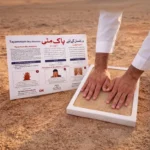 Tayammum Box: Premium Pure Clay Block for Dry Ablution (Hajj, Travel & Patients Approved)

Works as described, but I expected a slightly harder clay block. It is usable and performs fine, just handle it carefully because edges can chip.
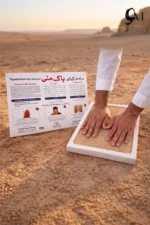

Product is good and serves its purpose. Delivery took a little longer than expected, but the tayammum clay itself was clean and well packed. Worth buying.

Quality is zabardast, bilkul sahi hai. Bus box thora bara hai lekin product acha hai. Recommend karunga zaroor.

Packaging was secure and clay was clean. I compared it with another local seller and this one looked much better. Paise wasool purchase.

Ordered for my father who cannot always use water because of his medical condition. This product made things much easier for him and our whole family felt relieved. Excellent quality. ❤️

میں خوش ہوں۔

Product recieved in good packaging. Box protected the clay very well. I honestly did not expect something this simple to be so useful during travel. Will recomend to family.

I was looking for a reliable tayammum kit for hospital after bike accedient. Only store online who is selling that clay. JazakAllah Munawer.Pk for offering such a useful Islamic product.

Bohat acha product hai. Clay packing bhi achi thi. Aur hajj ki tayari ke liye zaroori item laga.

Bought this tayammum box for my parents before hajj. Instruction card was helpful. It gave us peace of mind highly recommended.
Bought this tayammum box for my parents before hajj. Instruction card was helpful. It gave us peace of mind highly recommended.
Why Tayammum Box Buyers Trust Munawer.Pk
Imagine finding yourself on a long international flight, in a crowded transit bus between Masha’ir, or resting under the open sky during the night of Muzdalifah when water is completely out of reach. Instead of stressing over how you will fulfill your sacred obligation of Salah or desperately searching for clean earth in a paved, modern environment, you have absolute peace of mind right in your bag. You deserve a pure, reliable solution that ensures your ritual purification remains valid, effortless, and fully aligned with the Sunnah. Munawer.Pk makes this spiritual confidence possible by providing verified, deeply respected Islamic essentials crafted with total care.
Your Guide to Clean Earth Purification and Travel Taharah
| What Matters to You | Munawer.Pk ✅ | Typical Online Sellers |
| Purity & Compliance | ✅ 100% natural, pure tayammum clay completely free from impurities, fragrance, and artificial chemicals | ⚠️ Low-grade, unlabelled soil of unknown origin with no explicit verification of structural purity |
| Check Before You Pay | ✅ Direct open-box verification on COD paired with a video of your specific tayammum kit sent before dispatch | ❌ Blind shipments where you cannot confirm if the block arrived intact before handing over payment |
| Travel Durability | ✅ Sturdy, protective travel packaging designed specifically to prevent chipping or crumbling inside your luggage | ⚠️ Brittle blocks sold without robust protection that break down into messy tayammum dust during transit |
| Clear Guidance | ✅ Includes a comprehensive dual-language (Urdu & English) guide detailing correct tayammum dry ablution steps | ❌ Zero instruction materials provided, leaving first-time pilgrims confused in critical moments |
| 60+ Years of Trust | ✅ Family-owned specialist store serving Pakistan’s pilgrims with absolute dedication to your tayammum prayer needs | ⚠️ Generic online merchants who treat sacred worship items like everyday commercial plastic |
| Honest Return Policy | ✅ Pure, Sunnah-aligned service values featuring a straightforward 7 days easy returns and exchange window | ❌ Strict non-refundable terms on essential items, offering no help if the product arrives broken |
| Established Track Record | ✅ 4.8 stars from 7481+ happy customers, choosing the most reviewed specialist store in the category | ⚠️ Unrated or temporary seasonal listings that vanish right after the Hajj booking season peaks |
Fulfilling your daily prayers while traveling should never be compromised by a lack of clean facilities or fragile, broken equipment. By choosing our premium tayammum box, you are investing in a clean, highly portable block of tayammum ki mitti that brings independent purification to travelers, patients, and elderly family members alike. Before you finalize your travel bags or select your farewell gifts, look up the most reliable tayammum ki mitti online options, shop with Munawer.Pk today, and experience what preparing for worship with complete confidence actually feels like.
Eligibility for Returns:
You can request a return within 7 days from the date of delivery. To be eligible for a return, your item must be in the same condition that you received it, unworn or unused, with tags, and in its original packaging. You’ll also need the receipt or proof of purchase.
We recommend creating a video that showcases the unboxing of the product and provides an initial review.
Refund Process:
Upon approval of your return, we will initiate a refund to your original payment method. It may take a few business days for the funds to reflect in your account.
Return Shipping:
Customers are responsible for return shipping costs unless the return is due to a mistake on our part.
How to Request a Return:
To request a return, please contact our customer support team on WhatsApp at 0341 0738060 or email us at support@munawer.pk We will guide you through the process and provide you with the necessary instructions.
If your return is accepted, we’ll send you a return shipping label, as well as instructions on how and where to send your package. Items sent back to us without first requesting a return will not be accepted.
Damaged or Defective Items or Wrong Product or Never Arrived:
If you receive a damaged or defective item or the wrong product or product that never arrived, please contact us immediately with a video or photos of the product and its packaging. We will work to resolve the issue promptly. REMEMBER: YOU MUST MAKE VIDEO WHILE OPENING A PARCEL.
For more information Click here to visit: Refund and Refund Policy
Tayammum Box — Perform Dry Ablution Anywhere, Anytime
Millions of Pakistani pilgrims arrive in Saudi Arabia fully prepared for Hajj, yet many face the same moment of panic in Muzdalifah at Fajr time: no water within reach, a crowd of two million people around them, and the obligation of Salah that cannot wait. Finding clean natural earth in a paved, floodlit outdoor gathering is harder than it sounds. This is exactly the situation a compact tayammum clay block was made for, and yet it remains one of the most commonly forgotten items in a Pakistani Hajj kit.
Tayammum Ki Mitti — Pure Clay for Valid Dry Ablution
This tayammum box contains a block of 100% pure natural clay sourced from clean earth, free from impurities, chemicals, and added fragrances, making it fully valid for tayammum dry ablution according to all four Sunni madhabs. Performing dry ablution with this clay requires two simple strikes of the palm, followed by wiping the face and hands, the same method prescribed in the Quran and demonstrated in the Sunnah, completing the entire tayammum for namaz process in under a minute. The protective box keeps the tayammum clay completely clean and dry throughout your travel, and the block is reusable for many sessions across an entire Hajj trip without significant depletion.
Tayammum Mud for Muzdalifah, Hospital, Travel, and Home
Picture completing Fajr prayer in Muzdalifah with complete peace of mind, your tayammum kit already in your Ihram pouch, no searching for clean soil in the dark, no anxiety about missed Salah, just a calm and valid act of worship performed exactly as prescribed. Beyond Hajj, this tayammum sand block serves sick or hospitalised Pakistani Muslims who cannot use water due to wounds, surgical casts, or extreme weakness, elderly family members for whom regular wuzu has become physically difficult, and travelers on long international flights where wuzu is genuinely inconvenient. The tayammum mati is naturally odourless, safe for all skin types, and lightweight enough to fit in a small zip-lock bag inside any travel pouch without adding noticeable weight to your luggage. Pakistani scholars and Hajj preparation guides consistently recommend carrying tayammum soil as a non-negotiable essential, particularly for the nights of Mina and Muzdalifah, and it is increasingly included in Hajj farewell gift hampers alongside miswak, tasbeeh, and unscented soap. One block handles an entire trip, and the peace of mind it provides is worth far more than the space it occupies.
Tayammum Stone for Sale
Order your tayammum ki mitti online from Munawer.Pk today, with Cash on Delivery and fast delivery across Pakistan. Your Salah should never have to wait because water was not within reach, and a tayammum pad with dust for dry ablution is the solution.
Tayammum Box: Specifications That Justify the Purchase
Why This Tayammum Kit Solves a Real and Specific Hajj Necessity
📌 FEATURE BULLETS:
- 100% pure natural clay block, chemical-free and fragrance-free → this tayammum ki mitti meets the Islamic requirement of clean earth (tahir) for valid dry ablution across all four Sunni madhabs without restriction
- Firm, dry, slightly rough surface texture → provides the resistance needed for the palm-striking motion required in tayammum dry ablution, maintaining surface integrity across many repeated sessions from a single block
- Compact rectangular block at 8x15x3 inches in a protective cardboard box → keeps the tayammum clay clean, dry, and ready to use throughout an entire Hajj trip without contamination from bag contents
- Reusable for many tayammum sessions → one block lasts a full Hajj trip and beyond, covering Muzdalifah night, Mina days, long bus journeys between Masha’ir, and return flights in one purchase
- Urdu and English instruction card included → provides the correct step-by-step tayammum for namaz method for first-time pilgrims who have not previously performed dry ablution
- Solves the Muzdalifah water shortage specifically → pilgrims spending the night outdoors among millions of others face genuinely limited water access; a pre-packed tayammum mati block eliminates the need to find clean accessible earth in a dark, crowded, paved environment
- Valid for both wuzu substitute and tayammum for ghusl → one block covers both purification obligations when water is unavailable due to travel, illness, surgery, or extreme cold or heat
- Suitable for hospital patients, elderly, and air travel → enables tayammum at home or in any setting where water-based wuzu is medically or physically impossible, maintaining Salah without interruption
- Naturally odourless and completely skin-safe → 100% pure clay with no additives, safe for direct palm and face contact during the wiping motion required in dry ablution
- Very lightweight at approximately 0.5kg → one of the smallest and lightest essential items in any Hajj kit, fitting inside an Ihram waist pouch or zip-lock bag without adding noticeable luggage weight
Munawer.Pk sources this tayammum box from verified Islamic goods suppliers with clay purity explicitly confirmed, addressing the single most critical quality concern Pakistani scholars and Hajj preparation guides flag, which is the purity of the earth source for tayammum to be religiously valid.
Why Tayammum Box Buyers Trust Munawer.Pk
Imagine finding yourself on a long international flight, in a crowded transit bus between Masha’ir, or resting under the open sky during the night of Muzdalifah when water is completely out of reach. Instead of stressing over how you will fulfill your sacred obligation of Salah or desperately searching for clean earth in a paved, modern environment, you have absolute peace of mind right in your bag. You deserve a pure, reliable solution that ensures your ritual purification remains valid, effortless, and fully aligned with the Sunnah. Munawer.Pk makes this spiritual confidence possible by providing verified, deeply respected Islamic essentials crafted with total care.
Your Guide to Clean Earth Purification and Travel Taharah
| What Matters to You | Munawer.Pk ✅ | Typical Online Sellers |
| Purity & Compliance | ✅ 100% natural, pure tayammum clay completely free from impurities, fragrance, and artificial chemicals | ⚠️ Low-grade, unlabelled soil of unknown origin with no explicit verification of structural purity |
| Check Before You Pay | ✅ Direct open-box verification on COD paired with a video of your specific tayammum kit sent before dispatch | ❌ Blind shipments where you cannot confirm if the block arrived intact before handing over payment |
| Travel Durability | ✅ Sturdy, protective travel packaging designed specifically to prevent chipping or crumbling inside your luggage | ⚠️ Brittle blocks sold without robust protection that break down into messy tayammum dust during transit |
| Clear Guidance | ✅ Includes a comprehensive dual-language (Urdu & English) guide detailing correct tayammum dry ablution steps | ❌ Zero instruction materials provided, leaving first-time pilgrims confused in critical moments |
| 60+ Years of Trust | ✅ Family-owned specialist store serving Pakistan’s pilgrims with absolute dedication to your tayammum prayer needs | ⚠️ Generic online merchants who treat sacred worship items like everyday commercial plastic |
| Honest Return Policy | ✅ Pure, Sunnah-aligned service values featuring a straightforward 7 days easy returns and exchange window | ❌ Strict non-refundable terms on essential items, offering no help if the product arrives broken |
| Established Track Record | ✅ 4.8 stars from 7481+ happy customers, choosing the most reviewed specialist store in the category | ⚠️ Unrated or temporary seasonal listings that vanish right after the Hajj booking season peaks |
Fulfilling your daily prayers while traveling should never be compromised by a lack of clean facilities or fragile, broken equipment. By choosing our premium tayammum box, you are investing in a clean, highly portable block of tayammum ki mitti that brings independent purification to travelers, patients, and elderly family members alike. Before you finalize your travel bags or select your farewell gifts, look up the most reliable tayammum ki mitti online options, shop with Munawer.Pk today, and experience what preparing for worship with complete confidence actually feels like.
Tayammum Box FAQs – Always consult with the scholars
Q: What is tayammum and what is its significance in Islam?
A: Tayammum is the Islamic practice of dry ablution and ghusl — a purification ritual performed using clean earth, dust, sand, or any natural ground surface as a substitute for water-based wudu or ghusl when water is unavailable or its use is harmful. Its significance in Islam is profound — it reflects one of the core principles of the religion, which is that Allah does not intend difficulty for His servants. Tayammum ensures that no Muslim is ever prevented from performing salah or fulfilling other acts of worship that require ritual purity, regardless of their circumstances. Whether traveling through a desert, ill in a hospital bed, or in any situation where water cannot be accessed or used safely, a Muslim can maintain their spiritual connection and fulfill their religious obligations through tayammum. It is a mercy from Allah and a demonstration of Islam’s practical, compassionate approach to worship in all conditions of life.
Q: What does the word tayammum mean in Islamic terminology?
A: The word tayammum comes from the Arabic root “yamm” which literally means “to intend” or “to aim for.” In Islamic terminology, it refers to the act of deliberately and intentionally purifying oneself using clean earth or dust by striking the hands upon it and wiping the face and hands, with the specific intention of achieving ritual purity for worship. The word captures both the physical act and the spiritual intention simultaneously — the deliberate seeking of purification through the earth when water is absent, making it a complete act of worship in both form and intent.
Q: What is the concept of tayammum in Islam and why is it permitted?
A: (Already answered — refer to “What is tayammum and what is its significance in Islam?”)
Q: What is dry ablution and how does it substitute for regular wudu?
A: Dry ablution is the English translation of tayammum — the Islamic purification method that replaces water with clean earth or dust to achieve ritual purity. It substitutes for wudu by covering the same essential purification intent through a simplified physical act: striking clean earth with the palms and wiping the face and hands (elbows). While wudu involves washing specific body parts with water in a prescribed sequence, tayammum condenses the purification into these two essential wiping actions. Islamically, the substitution is complete and valid — tayammum does not produce a lesser form of purity but a full, legitimate ritual purity that makes all the same acts of worship permissible that wudu would permit, for as long as the tayammum remains valid.
Q: Where in the Quran is tayammum mentioned and what does it say?
A: Tayammum is mentioned in two places in the Quran. The primary and most detailed verse is in Surah Al-Ma’idah (5:6), which states: when you cannot find water, then seek clean earth and wipe your faces and hands with it. The second mention is in Surah An-Nisa (4:43), which addresses the condition of being in a state of janabah while traveling without access to water, again permitting the use of clean earth for purification. Both verses establish tayammum as a divine permission — not a mere concession or compromise — confirming it as a fully valid and prescribed form of purification within the Islamic framework.
Q: Which surah of the Quran contains the orders regarding wudu, ghusl, and tayammum together?
A: Surah Al-Ma’idah, verse 6 is the comprehensive Quranic verse that addresses all three forms of Islamic purification together — wudu (ritual washing before prayer), ghusl (full body purification bath), and tayammum (dry ablution with earth). This single verse outlines when each form of purification is required, how they are performed at a foundational level, and under what circumstances tayammum may be used as a substitute. It is one of the most jurisprudentially significant verses in the Quran for the practical Islamic sciences of fiqh and taharah (ritual purity).
Q: What is the key difference between regular wudu and tayammum?
A: The differences operate on several levels: (Consult scholars)
Medium: Wudu uses water; tayammum uses clean earth, dust, or any surface of natural ground origin
Conditions: Wudu is the default and must be performed whenever possible; tayammum is only valid when specific conditions permitting its use are met
Physical acts: Wudu involves washing the face, hands to elbows, wiping the head, and washing the feet in a prescribed sequence; tayammum requires only two strikes on clean earth — one for wiping the face and one for wiping the hands to the wrists
Duration of validity: Wudu remains valid until broken by a known nullifier; tayammum is additionally broken when water becomes accessible or when the condition that made tayammum permissible no longer exists
Scope: A single tayammum can substitute for multiple acts of worship during the same period of valid tayammum, similar to wudu
Q: What are the conditions that must be met before performing tayammum?
A: Before tayammum becomes permissible, one of several specific conditions must be present: (Consult scholars)
- Absence of water — no water is available within a reasonable distance or accessible timeframe
- Inability to use water — water is present but the person is medically unable to use it due to illness, injury, or a condition where water contact would cause harm or worsen the condition
- Extreme cold/hot — water is available but using it in extreme cold/hot would cause genuine harm to the person and no means of heating/cooling the water exists
- Fear of harm — using water would endanger life, health, or safety in the specific circumstances
- Insufficient water — the available water is needed for drinking, cooking, or survival and cannot be used for purification without creating a necessity risk
Q: Under what conditions is a Muslim permitted to perform tayammum?
A: (Already answered above.)
Q: When exactly is tayammum considered permissible as a substitute for wudu?
A: (Already answered above.)
Q: What are the valid Islamic reasons for performing tayammum instead of wudu?
A: (Already answered above — refer to conditions for tayammum.)
Q: When should a Muslim resort to performing tayammum in their daily life?
A: In practical daily life, the situations where tayammum becomes relevant for Pakistani Muslims include: traveling through areas without water access, particularly on long road journeys through rural Punjab, Balochistan, or northern mountain routes; being hospitalized or bedridden with wounds, casts, or post-surgical conditions where water contact is medically prohibited; during water shortages which occur periodically in Pakistani cities; being in a state of janabah while in a location without access to water for ghusl; experiencing severe illness where exposure to water would worsen symptoms; and during outdoor activities, camping, or trekking in Pakistan’s northern areas where clean water may be scarce. The key principle is that a sincere assessment of genuine inability or harm — not mere inconvenience — is what makes tayammum valid.
Q: Can tayammum be performed as a valid substitute for wudu before offering namaz?
A: Yes — tayammum performed under valid conditions is a complete and fully accepted substitute for wudu before namaz. The salah performed with tayammum is as valid as salah performed with water-based wudu. There is no requirement to repeat the prayer later if water becomes available after the prayer has already been performed — the prayer stands complete and accepted. However, if water becomes available before the prayer is performed, the tayammum is invalidated and wudu must be performed before praying.
Q: Is tayammum a valid substitute for ghusl and when can it be used?
A: Yes — tayammum is a complete and valid substitute for ghusl (the full purification bath) under the same conditions that make it permissible as a substitute for wudu. When a person is in a state that requires ghusl — such as janabah, the end of menstruation, or post-natal bleeding — and water is unavailable or its use would cause harm, tayammum is performed with the intention of substituting for ghusl. The tayammum procedure itself remains the same — only the niyyah (intention) changes to specify that it is being performed as a substitute for ghusl rather than wudu. The resulting ritual purity is complete and makes all acts previously prohibited by the state of janabah permissible, including prayer and recitation of Quran.
Q: Can tayammum be performed instead of ghusl janabat in the absence of water?
A: (Already answered above.)
Q: What are the correct steps to perform tayammum according to Islamic teachings?
A: The basic steps of tayammum as agreed upon across the major schools of Islamic jurisprudence are:
- Make the niyyah (intention) in the heart to perform tayammum for the purpose of worship
- Recite Bismillah — begin with the name of Allah
- Strike both palms on clean earth or dust — a single firm strike with the entire palm surface making contact with the earth
- Blow off or shake off excess dust gently from the palms if needed
- Wipe the entire face with both palms in a single downward motion, ensuring the entire face is covered as in wudu
- Strike the palms on the earth again for a second time (according to Hanafi and some other schools)
- Wipe the right hand over the left hand and arm and then the left hand over the right hand and arm up to and including the wrists (some schools) or elbows (Hanafi)
The complete act takes under one minute and produces full valid ritual purity when performed correctly with proper intention and under valid conditions.
Q: How do you properly perform tayammum as a substitute for wudu?
A: (Already answered above.)
Q: What are the step-by-step instructions for performing tayammum correctly?
A: (Already answered above.)
Q: What are the steps involved in performing dry ablution using a tayammum kit?
A: A tayammum kit — typically consisting of a pouch or pad containing clean natural dust or earth, sometimes compressed into a brick or tablet form — simplifies the process of accessing an appropriate tayammum surface in modern settings. Using a tayammum kit:
- Open the kit and expose the dust surface or compressed earth pad
- Make niyyah with the heart for the purpose of the tayammum
- Press both palms firmly onto the dust surface of the kit, ensuring full palm contact
- Gently shake or blow excess dust from the palms
- Wipe the face completely with both palms
- Press palms onto the kit surface again for the second strike
- Wipe hands according to your madhab’s requirement — to wrist or to elbow
- Store the kit in its pouch for future use — a good quality kit can be used multiple times before the dust is exhausted
Tayammum kits are particularly valuable for travel, hospital settings, long flights, and for Pakistani pilgrims performing Hajj or Umrah who may find themselves in situations requiring tayammum.
Q: What is the correct method of performing tayammum according to the Hanafi school of thought?
A: The Hanafi method is the most widely followed in Pakistan and includes the following specific details:
- Niyyah — make the intention in the heart specifically for the worship requiring purity
- Bismillah — begin with Bismillah ir-Rahman ir-Raheem
- First strike — strike both palms on clean earth simultaneously with fingers spread
- Wipe the face — wipe the entire face with both palms, from hairline to chin and ear to ear, ensuring no part is missed
- Second strike — strike both palms on the earth again
- Wipe the right arm — use the left palm to wipe the right hand and arm up to and including the elbow, with fingers interlaced to cover between the fingers
- Wipe the left arm — use the right palm to wipe the left hand and arm up to and including the elbow
The key Hanafi distinction from other schools is that wiping extends to the elbows (not just the wrists) and that two separate strikes on the earth are required — one for the face and one for the arms.
Q: What are the step-by-step instructions for performing tayammum in the Hanafi method?
A: (Already answered above.)
Q: How do you correctly perform tayammum following the Hanafi method?
A: (Already answered above.)
Q: How is tayammum performed according to the Shia method?
A: The Shia Ithna Ashari method of tayammum has some specific differences from the Sunni Hanafi method: (Consult scholars)
- Niyyah — make clear intention for the specific act of worship requiring purification
- First strike — strike both palms on clean earth with fingers together (not spread)
- Wipe the forehead — wipe from the hairline to the eyebrows using both palms, covering only the forehead rather than the entire face
- Wipe the back of hands — wipe the back of the right hand with the left palm, then the back of the left hand with the right palm
The key differences in the Shia method are: wiping only the forehead rather than the full face, wiping only the back of the hands (not up to the elbows), and the specific hand positions during the earth strike. Shia jurisprudence also holds that tayammum can be performed on specific surfaces including earth, sand, stone, and other natural materials that have not been processed or refined.
Q: What is the correct Sunni method for performing tayammum?
A: The Sunni method follows the general steps outlined above with variations by madhab — Hanafi extends wiping to the elbows while the Shafi’i, Maliki, and Hanbali schools have their own specific details regarding the extent of wiping and the number of strikes. The commonly agreed Sunni elements across all four madhabs are: sincere niyyah, striking clean earth, wiping the entire face, and wiping both hands — with the primary scholarly difference being whether wiping extends to the wrist or the elbow and the precise technique of the earth strike.
Q: What are the obligatory acts (farz) of tayammum that must be fulfilled?
A: According to Hanafi fiqh — the predominant school followed in Pakistan — tayammum has three obligatory (farz) acts:
- Niyyah (intention) — making a sincere, conscious intention in the heart to perform tayammum for the purpose of worship or removing ritual impurity; without niyyah, tayammum is not valid
- Wiping the entire face — covering every part of the face with the dust-covered palms, from hairline to chin and ear to ear, leaving no area missed
- Wiping both arms up to and including the elbows — covering the complete surface of both forearms from fingertips to elbows
If any of these three acts is missed or performed incompletely, the tayammum is invalid and must be repeated.
Q: How many obligatory acts are there in tayammum?
A: (Already answered above — three obligatory acts according to Hanafi fiqh: niyyah, wiping the face, and wiping the arms to the elbows.)
Q: What are the 3 fard (obligatory) acts of tayammum?
A: (Already answered above.)
Q: What is the dua to be recited when performing tayammum?
A: There is no specific dua prescribed exclusively for tayammum in authentic hadith. However, the following practices are recommended:
- Before beginning: recite Bismillah ir-Rahman ir-Raheem
- The niyyah is made in the heart and can be verbalized as: “Nawaytu an atayammama li-stibaahatil-salah” — “I intend to perform tayammum to make prayer permissible”
- After completing tayammum: it is recommended to recite the same supplication said after completing wudu — “Ash-hadu an la ilaha illallah wahdahu la sharika lah, wa ash-hadu anna Muhammadan abduhu wa rasuluh. Allahumma-j’alni minat-tawwabeena waj’alni minal-mutatahhireen” — “I bear witness that there is no god but Allah alone with no partner, and I bear witness that Muhammad is His servant and messenger. O Allah, make me among those who repent and among those who purify themselves.”
Q: Is there a specific dua that should be read before or during tayammum?
A: (Already answered above.)
Q: What is the correct niyat (intention) for performing tayammum?
A: The niyyah for tayammum must be made in the heart — the verbal expression is recommended but not obligatory. The intention should specify what the tayammum is substituting for:
For tayammum as a substitute for wudu:
“Nawaytu at-tayammuma li-stibaahatil-salah”
“I intend tayammum to make prayer permissible”
For tayammum as a substitute for ghusl:
“Nawaytu at-tayammuma li-rafa’il-hadathil-akbar”
“I intend tayammum to remove the major ritual impurity”
The essential element is a conscious, sincere awareness in the heart of what you are doing and why — a vague or distracted “going through the motions” without genuine intention does not fulfill the niyyah requirement.
Q: What is the niyat for tayammum in Arabic?
A: (Already answered above.)
Q: What are the essential conditions (sharait) for tayammum to be valid?
A: Beyond the conditions that make tayammum permissible, the conditions for its validity include:
- Islam — the person must be Muslim
- Valid reason — one of the accepted conditions permitting tayammum must genuinely exist
- Clean earth — the surface used must be clean, pure, and of natural earth origin; impure or chemically processed surfaces are not valid
- Correct intention — niyyah must be present and specific
- Entry of prayer time — according to Hanafi fiqh, tayammum is only valid after the time for the prayer being intended has entered; tayammum performed before prayer time is not valid for that prayer
- Performance on the correct body parts — face and arms must be wiped completely and correctly
- No water becoming available — if water becomes accessible during or after tayammum but before the prayer, the tayammum is invalidated
Q: With which materials or surfaces can tayammum be validly performed?
A: The scholars of Islam have debated the precise acceptable materials, with the following general findings:
Unanimously accepted by all major schools:
- Natural soil and earth
- Clean sand
- Natural stone and rock
- Clay
Accepted by some schools, debated by others:
- Dust settled on walls, floors, or surfaces — Hanafi scholars permit this if genuine dust of earth origin has settled on the surface
- Limestone and natural mineral stone
- Mud (when dry)
Not accepted by any major school:
- Processed materials like refined metal, glass, or plastic with no earth dust present
- Impure or najis (ritually impure) surfaces
- Artificially manufactured materials with no earth composition
The Hanafi school is the most accommodating regarding surfaces — permitting any surface on which natural earth dust has settled — which has significant practical relevance for modern contexts like using a dusty car dashboard, wall, or floor.
Q: Can tayammum be performed using dust and what type of dust is acceptable?
A: Yes — dust is one of the primary valid materials for tayammum. The dust must be:
- Of natural earth origin — dust that has settled from soil, sand, or natural ground surfaces
- Clean and ritually pure — not contaminated with impure substances
- Dry or lightly dusty — a surface with visible natural dust settled on it is sufficient according to Hanafi scholars
Dust settled on walls, car surfaces, floors, or any surface where natural earth particles have accumulated is acceptable according to the Hanafi school, which is why this school’s position is particularly practical for urban and travel contexts where natural soil may not be immediately accessible.
Q: Is it permissible to perform tayammum on a wall instead of soil or sand?
A: According to the Hanafi madhab — the predominant school in Pakistan — performing tayammum on a wall is permissible provided that natural dust or earth particles have settled on the wall surface. The logic is that such dust is genuinely of earth origin regardless of the surface it rests on. If the wall is completely clean with no dust present, then it is not a valid surface for tayammum according to most scholars. The Shafi’i and Hanbali schools are more restrictive and require direct earth, sand, or natural soil — they do not permit walls or floors even if dusty. Pakistani Muslims following Hanafi fiqh may validly use a dusty wall for tayammum in situations where no other valid earth surface is available.
Q: How do you perform tayammum using a wall when soil or sand is unavailable?
A: For Hanafi followers performing tayammum on a wall:
- Identify a wall with visible natural dust settled on its surface
- Make niyyah in the heart
- Say Bismillah
- Strike both palms firmly against the dusty wall surface, ensuring full palm contact with the dust
- Shake or blow excess dust from the palms lightly
- Wipe the entire face with both palms
- Strike the palms against the wall again
- Wipe both arms to the elbows as in the standard Hanafi method
The key requirement is that genuine earth-origin dust is present on the wall — a freshly painted or completely clean wall without any dust does not qualify.
Q: How can tayammum be performed using a stone or rock surface?
A: Natural stone and rock are valid tayammum surfaces according to all four major Sunni schools. The method is identical to the standard tayammum procedure — strike both palms firmly against the stone surface, ensuring the palms make direct contact with the natural mineral surface, then proceed with wiping the face and arms in the prescribed manner. Smooth stone surfaces where palms can make flat contact are preferable to very rough or sharp surfaces that might cut the hands. A naturally occurring stone — from the ground, a wall, or a rocky surface — is always a valid tayammum medium as long as it is clean and ritually pure.
Q: Can a tayammum stone be used as a valid surface for performing dry ablution?
A: Yes — a dedicated tayammum stone is a valid and recognized tool for performing dry ablution. It is simply a clean piece of natural stone carried specifically for the purpose of having a valid tayammum surface readily available in any situation. This practice is particularly relevant for travelers, hospital patients, and pilgrims performing Hajj and Umrah who want to ensure they always have access to a valid tayammum surface regardless of their environment. The stone must be natural — not artificially manufactured — and must be kept clean and ritually pure. Some Islamic supply stores and online sellers in Pakistan now sell purpose-made tayammum stones and compact earth tablets specifically for this use.
Q: How can you perform tayammum correctly at home using a tayammum kit or pad?
A: (Already answered — refer to “What are the steps involved in performing dry ablution using a tayammum kit?”)
Q: How can tayammum be performed while traveling in a car?
A: Performing tayammum in a car is a common practical need for Pakistani travelers on long journeys. Options include:
- A tayammum kit or pouch carried in the car — strike the palms on the kit’s earth surface
- A natural stone kept in the car specifically for tayammum purposes
- Stopping at the roadside and using natural earth or soil from the ground if accessible
The car itself presents some practical challenges — limited space for arm movements and the need to ensure the surface has genuine earth dust rather than chemical residue from cleaning products. Carrying a small dedicated tayammum kit in the glove compartment is the most reliable solution for regular long-distance drivers in Pakistan.
Q: How do you perform tayammum specifically as a substitute for ghusl?
A: The physical procedure of tayammum is identical whether substituting for wudu or ghusl — the difference lies entirely in the niyyah (intention). When performing tayammum to substitute for ghusl, the intention must be specifically to remove the major ritual impurity (hadath akbar) rather than the minor impurity (hadath asghar) removed by wudu. The steps remain: Bismillah, niyyah for ghusl substitute, first strike on earth, wipe face, second strike, wipe arms to elbows according to Hanafi method. One tayammum with the correct intention for ghusl removes the state of janabah completely and makes all acts of worship that were prohibited by that state permissible.
Q: How does a tayammum pad with dust work for performing dry ablution?
A: (Already answered — refer to “What are the steps involved in performing dry ablution using a tayammum kit?”)
Q: When was the permission for tayammum first revealed in Islam?
A: The permission for tayammum was first revealed during the 5th year of Hijri, during the expedition of Banu Mustaliq (also known as the Ghazwah al-Muraisi). The occasion of revelation is narrated in an authentic hadith reported by Sayyidah Aisha (may Allah be pleased with her) — during this journey, her necklace was lost and the Muslim army halted in a place with no water. This situation caused significant concern about prayer, and it was on this occasion that the verse of tayammum was revealed in Surah An-Nisa, granting the Muslim ummah this divine concession. Sayyidah Aisha’s father Abu Bakr (may Allah be pleased with him) is reported to have said to her: “You are truly blessed — Allah has revealed a concession for the entire Muslim ummah because of you.”
Q: In which year of Hijri was tayammum first permitted in Islam?
A: (Already answered above — the 5th year of Hijri.)
Q: When did tayammum become obligatory in Islamic history?
A: Tayammum itself is not “obligatory” in the sense that it must always be performed — rather, it becomes obligatory when the conditions requiring ritual purity (for prayer, Quran recitation, tawaf, etc.) are present and water is unavailable or cannot be used. The permission and ruling for tayammum was established in the 5th year of Hijri through the Quranic revelation and the circumstances described in the authentic hadith of Sayyidah Aisha. From that point onward, tayammum has been an established, divinely ordained part of Islamic purification law that applies whenever its valid conditions are met.
Q: Where can I buy a tayammum kit or stone online in Pakistan?
A: Tayammum kits, pouches, and stones are available through several channels in Pakistan:
- Islamic bookstores and religious supply shops in major cities — particularly shops near large mosques in Lahore, Karachi, and Islamabad that stock prayer accessories
- Hajj and Umrah supply shops — these specialized stores carry tayammum kits as part of their pilgrimage preparation product range; concentrated in areas like Hall Road Lahore and Saddar Karachi
- Online Islamic stores operating via social media (Facebook and Instagram pages selling Islamic products) — increasingly common and often offer COD delivery
Q: Can tayammum be done with dust from a car dashboard?
A: Consult a scholar
Q: Guide to performing tayammum during an international flight?
A: Performing tayammum on an international flight is a practically important issue for Pakistani travelers. Here’s how to manage it:
If you have a tayammum kit: The simplest solution — carry a small pouch of clean earth or a tayammum stone in your hand luggage and use it in the aircraft lavatory or at your seat
If no kit is available: Check the aircraft lavatory surfaces — if natural dust has settled on any surface, Hanafi scholars permit using it; however, clean aircraft lavatories typically won’t have valid dust
Prayer timing on flights: Perform wudu with the aircraft’s water supply if able — aircraft lavatories have water and wudu is the default; only resort to tayammum if medical reasons prevent water use
Practical recommendation for Pakistani air travelers: Pack a small sealed tayammum kit or a natural stone in your carry-on before any flight — this eliminates all uncertainty and ensures you can maintain your prayers during long international journeys without any concern about the validity of your purification
Prayer direction and timing: Use a qibla direction app to determine qibla from your flight position, and pray toward that direction as closely as the aircraft seating allows — Islam permits facing the nearest approximation of qibla when exact direction is impossible.
Tayammum Box: Premium Pure Clay Block for Dry Ablution (Hajj, Travel & Patients Approved)
Works as described, but I expected a slightly harder clay block. It is usable and performs fine, just handle it carefully because edges can chip.
Product is good and serves its purpose. Delivery took a little longer than expected, but the tayammum clay itself was clean and well packed. Worth buying.
Quality is zabardast, bilkul sahi hai. Bus box thora bara hai lekin product acha hai. Recommend karunga zaroor.
Packaging was secure and clay was clean. I compared it with another local seller and this one looked much better. Paise wasool purchase.
Ordered for my father who cannot always use water because of his medical condition. This product made things much easier for him and our whole family felt relieved. Excellent quality. ❤️
میں خوش ہوں۔
Product recieved in good packaging. Box protected the clay very well. I honestly did not expect something this simple to be so useful during travel. Will recomend to family.
I was looking for a reliable tayammum kit for hospital after bike accedient. Only store online who is selling that clay. JazakAllah Munawer.Pk for offering such a useful Islamic product.
Bohat acha product hai. Clay packing bhi achi thi. Aur hajj ki tayari ke liye zaroori item laga.
Bought this tayammum box for my parents before hajj. Instruction card was helpful. It gave us peace of mind highly recommended.
Bought this tayammum box for my parents before hajj. Instruction card was helpful. It gave us peace of mind highly recommended.
Eligibility for Returns:
You can request a return within 7 days from the date of delivery. To be eligible for a return, your item must be in the same condition that you received it, unworn or unused, with tags, and in its original packaging. You’ll also need the receipt or proof of purchase.
We recommend creating a video that showcases the unboxing of the product and provides an initial review.
Refund Process:
Upon approval of your return, we will initiate a refund to your original payment method. It may take a few business days for the funds to reflect in your account.
Return Shipping:
Customers are responsible for return shipping costs unless the return is due to a mistake on our part.
How to Request a Return:
To request a return, please contact our customer support team on WhatsApp at 0341 0738060 or email us at support@munawer.com We will guide you through the process and provide you with the necessary instructions.
If your return is accepted, we’ll send you a return shipping label, as well as instructions on how and where to send your package. Items sent back to us without first requesting a return will not be accepted.
Damaged or Defective Items or Wrong Product or Never Arrived:
If you receive a damaged or defective item or the wrong product or product that never arrived, please contact us immediately with a video or photos of the product and its packaging. We will work to resolve the issue promptly. REMEMBER: YOU MUST MAKE VIDEO WHILE OPENING A PARCEL.
For more information Click here to visit: Refund and Refund Policy