
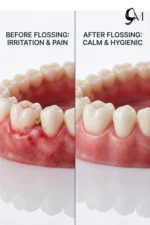




Dental Floss — Clean the 40% of Your Teeth Your Toothbrush Never Touches
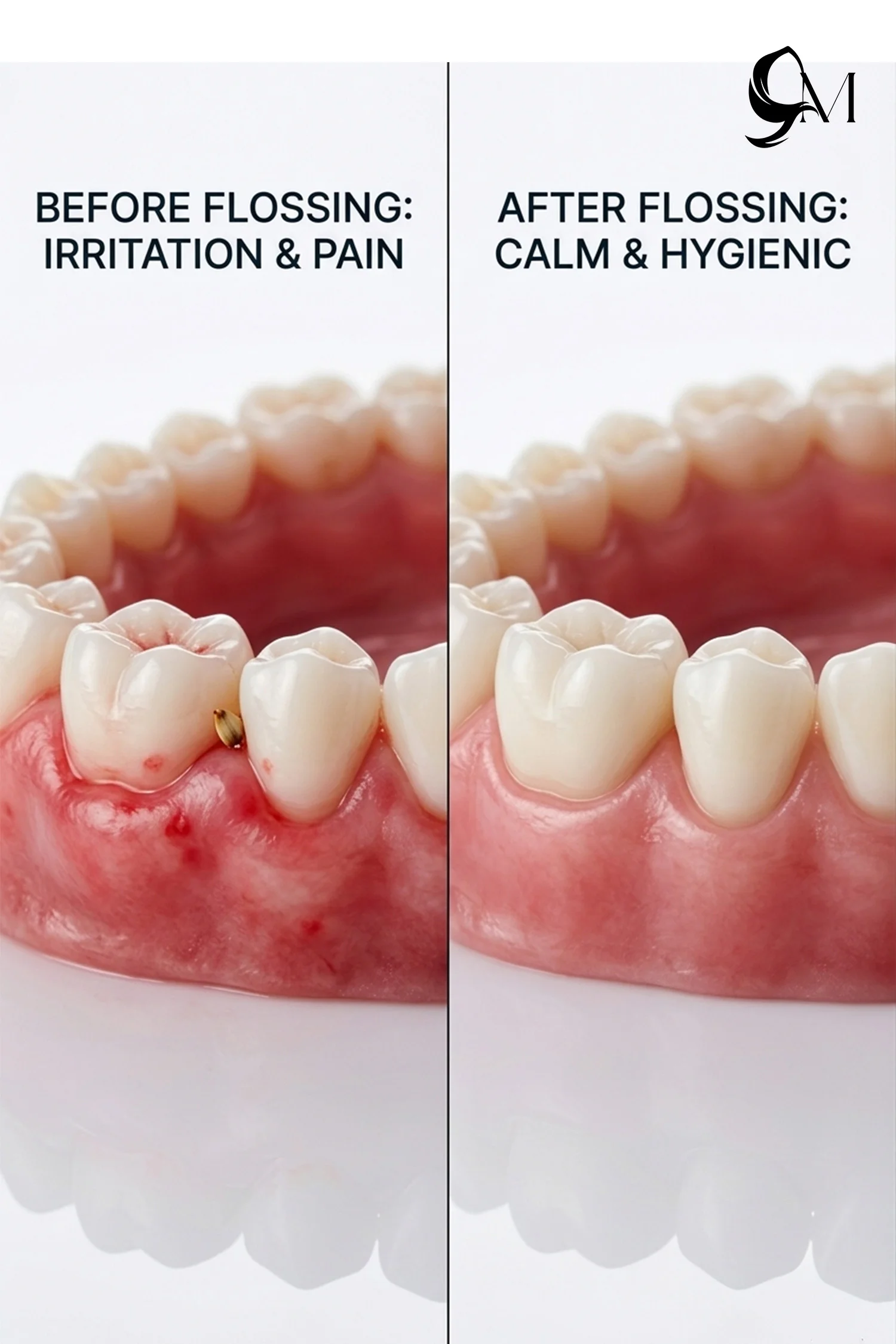
You brush twice a day, your breath feels fine, and you assume your teeth are clean. But a toothbrush only cleans the outer surfaces, the flat faces and chewing edges. The tight gaps between your teeth, where roti fibres, meat, and saalan get packed in every single meal, stay untouched. That is where plaque builds quietly, where cavities form invisibly, and where gum disease starts before you feel any pain at all.
Dental Floss Picks — No Wrapping, No Fumbling, Just Clean Teeth
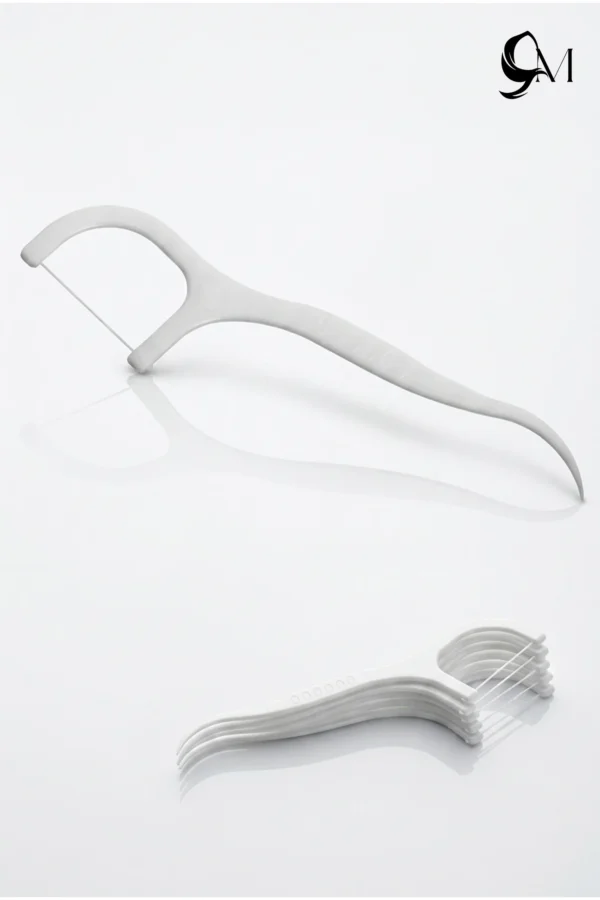
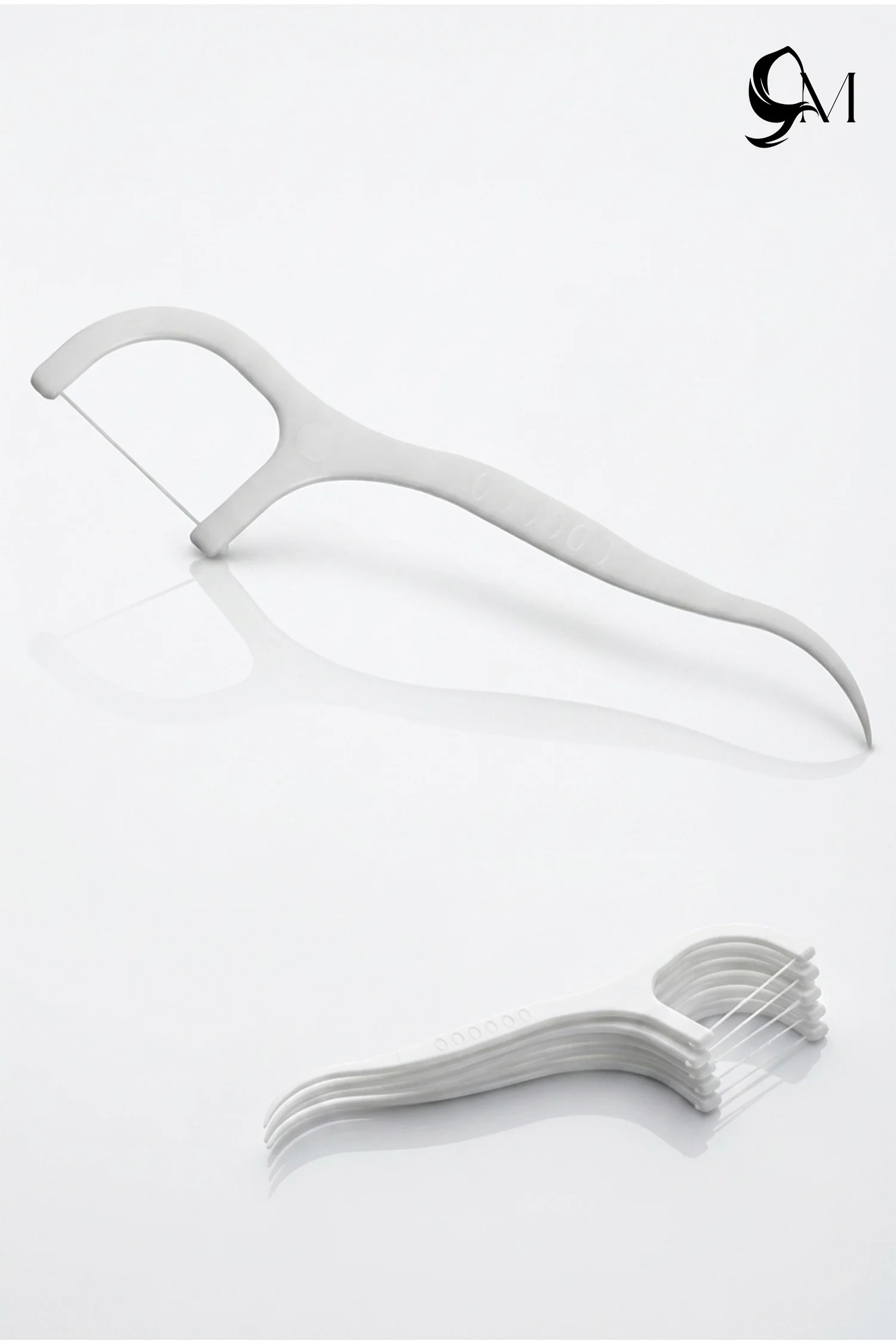
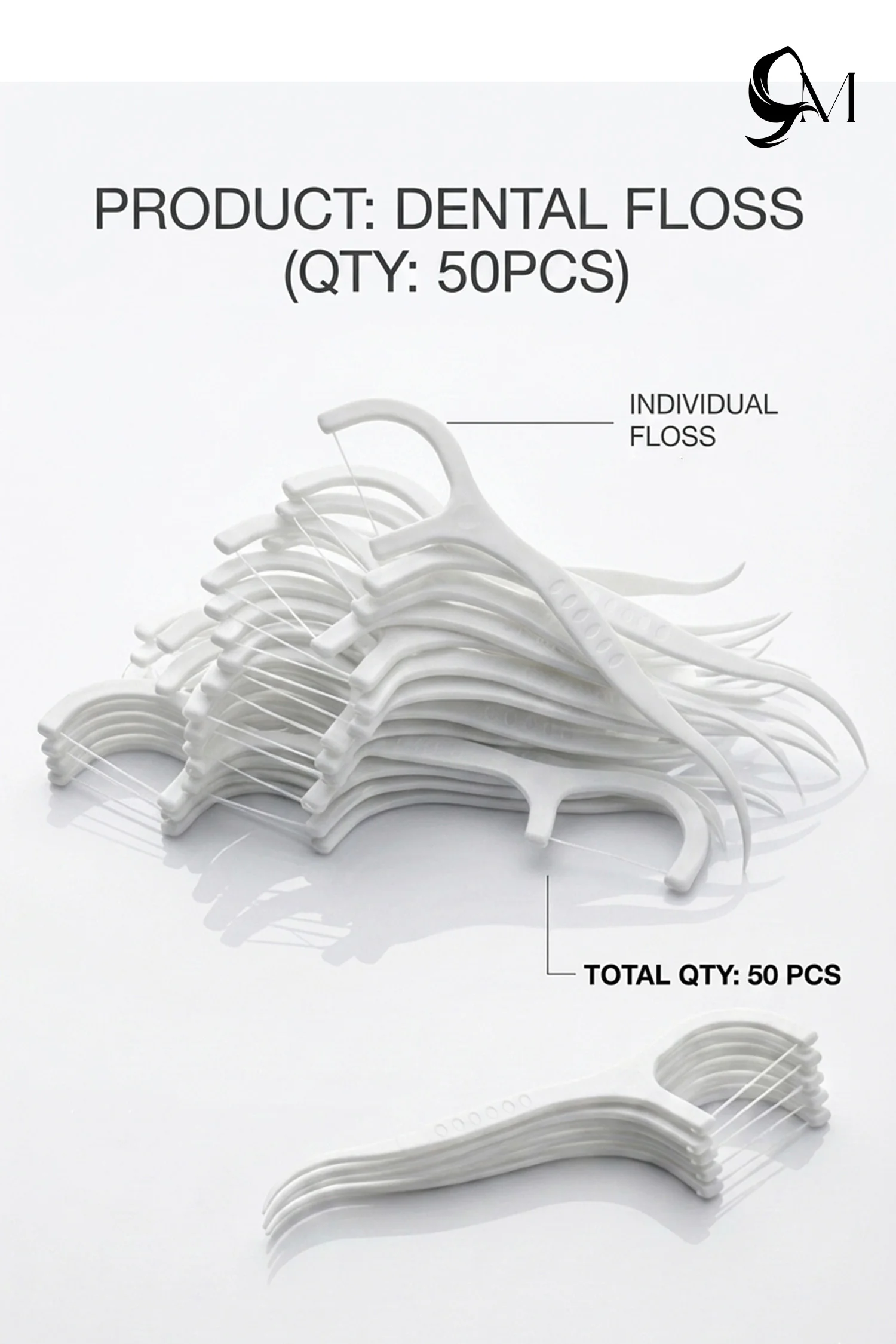
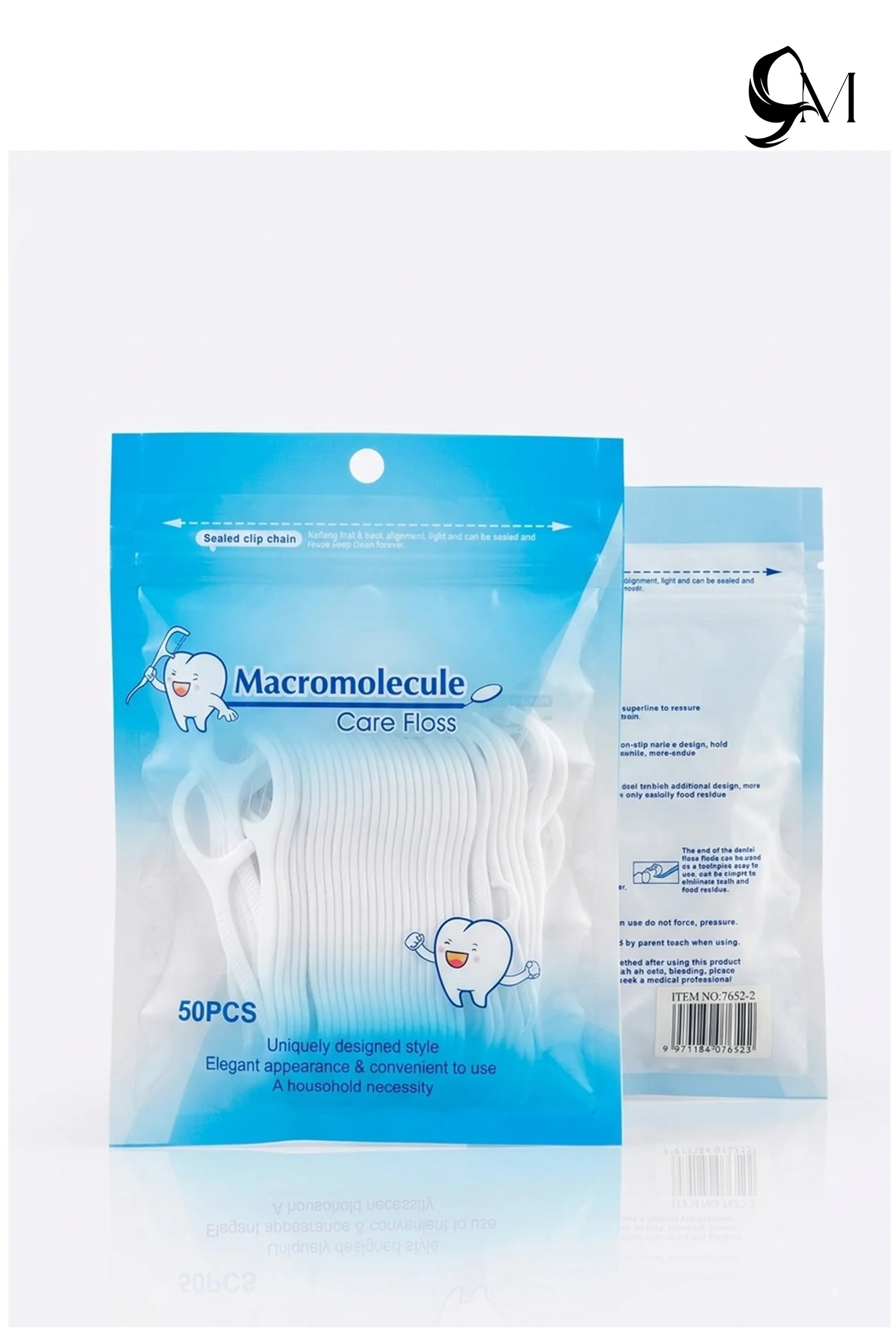
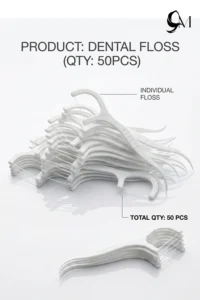
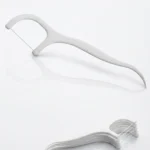
This dental floss pack of 50 disposable picks gives you a plastic handle with pre-attached nylon thread on one end and a toothpick on the other, making it the easiest possible way to start flossing if you have never done it before. Simply slide the floss end gently between teeth, move up and down along the gum line where most plaque hides, and discard after use — no wrapping around fingers, no tangled thread, no learning curve. Each dental floss pick is shred-resistant, strong enough to handle tight gaps without snapping mid-use, and compact enough to keep in a bag, car compartment, or office drawer for use after meals.
Floss Dental Habit That Pakistani Dentists Recommend
Picture running your tongue across your teeth after flossing for the first time and genuinely feeling the difference — the smooth, clean surface where yesterday there was something your brush had simply been gliding past. These dental floss sticks are particularly useful for the Pakistani diet, where roti, kebab, and saalan consistently leave fibrous food debris packed between teeth that brushing alone cannot dislodge. Only around eleven percent of Pakistanis currently floss regularly, yet sixty percent have dental caries, and dentists across Pakistan consistently point to that gap as the reason. Your gums may bleed slightly in the first few days of starting — this is completely normal and signals that your gums are responding to the cleaning, not that anything is wrong. One pack of fifty disposable dental floss picks lasts several weeks at one daily use, making it one of the lowest-cost health habits you can add to your routine with measurable, dentist-backed results.
Dental Floss Price in Pakistan
The current price of dental floss pakistan is 299rs. It is important to note that this price may vary based on several external factors, such as changes in manufacturing costs, market demand, and economic conditions. This means that fluctuations in these factors could lead to an increase or decrease in the price of the lotion over time.Buy dental floss pack from Munawer.Pk today, with Cash on Delivery and fast delivery across Pakistan. Two minutes a day, every night before bed, and your teeth will thank you for years.
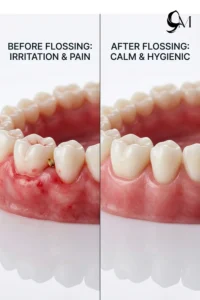
Dental Floss: Specifications That Justify the Purchase
Why These Dental Floss Picks Deliver What a Toothbrush Physically Cannot
📌 FEATURE BULLETS:
- Floss picks format with pre-attached nylon thread and toothpick end → this disposable dental floss pick requires no wrapping around fingers, making it significantly easier for beginners and people with short fingers or arthritis than thread floss
- Pack of 50 disposable picks → sufficient for 50 individual flossing sessions, covering 1 to 2 months of daily use at one pick per session for a single user
- Nylon thread with polymer coating → slides between teeth and along the gum line with reduced resistance, the most critical performance difference between functional dental floss sticks and cheap generic versions that shred mid-use
- Shred-resistant thread construction → does not break or fray between tight teeth, addressing the most common complaint reported by Pakistani buyers who have tried budget floss from unverified sellers
- Cleans the interdental space a toothbrush bristle physically cannot reach → removes food particles and plaque from between teeth where 60% of Pakistani tooth decay originates, particularly relevant for roti, saalan, meat, and fibrous vegetable-heavy daily diets
- Dual-end design, floss on one end and toothpick on the other → handles both stuck food removal and interdental plaque cleaning in one disposable tool without carrying two separate items
- Small enough to fit in a pocket, bag, or desk drawer → this dental floss pack travels in any bag without taking up space, supporting the once-daily nighttime flossing routine dentists recommend regardless of location
- Single-use disposable per pick → eliminates bacteria transfer between sessions, a hygiene concern with reusing thread floss or sharing picks between family members
- Compatible with braces, dental implants, and crowns → the pick handle provides better control for cleaning around dental hardware than bare-finger thread wrapping
- One pack covers 1 to 2 months at daily use → per-day cost is significantly lower than the cavity treatment cost it helps prevent, particularly relevant in Pakistan where 90% of people visit a dentist only when pain becomes severe
Munawer.Pk stocks the best dental floss pick format with shred-resistant nylon thread confirmed, directly addressing the most consistent Pakistani buyer complaint of cheap generic floss breaking before completing a single session.
Dental Floss: FAQs
Q: What is dental floss and what role does it play in oral hygiene?
A: Dental floss is a thin, flexible thread or filament used to clean the spaces between teeth and along the gumline — areas that a toothbrush cannot effectively reach regardless of brushing technique or brush quality. It plays a foundational role in oral hygiene by removing food particles, plaque, and bacteria from these interdental spaces before they cause tooth decay, gum disease, and bad breath. Dentists consistently emphasize that brushing alone cleans only about 60% of tooth surfaces — the remaining 40% exists in the tight spaces between teeth that only floss or interdental cleaning tools can access. Regular flossing prevents the buildup of plaque that hardens into tartar, which can only be removed by professional dental cleaning. In Pakistani oral health culture, flossing is still significantly underutilized compared to brushing — yet gum disease and interdental decay are among the most common dental problems reported in Pakistani clinics, making floss one of the most impactful and underappreciated oral hygiene tools available.
Q: What does dental floss mean and how is it used in daily dental care?
A: (Already answered above.)
Q: What is the purpose of dental floss in maintaining good oral health?
A: (Already answered above.)
Q: What materials is dental floss typically made of?
A: Dental floss is manufactured from several different materials, each with distinct properties:
- Nylon (multifilament) — the most common material; made of multiple nylon strands twisted together; available waxed or unwaxed; effective but can shred between tight teeth
- PTFE (polytetrafluoroethylene / monofilament) — a single solid filament that slides smoothly between tight teeth without shredding; more expensive but significantly more comfortable
- Silk — a natural, biodegradable option used in some eco-friendly flosses; softer feel but less durable than synthetic options
- Bamboo fiber — increasingly used in natural and sustainable floss products
- Charcoal-infused nylon — standard nylon with activated charcoal coating for claimed additional whitening and antibacterial benefits
- Wax coating — not a base material but a coating applied to nylon floss to improve glide between tight teeth; made from natural beeswax or synthetic microcrystalline wax
- Mint, cinnamon, or other flavoring compounds — applied as a coating to improve the flossing experience
Q: What are the everyday uses of dental floss beyond basic teeth cleaning?
A: Dental floss has a surprising number of practical uses beyond oral hygiene:
- Removing stuck rings — wrapping floss around a swollen finger compresses the tissue enough to slide a ring off
Q: How is dental floss correctly used as part of a daily oral care routine?
A: The correct sequence and technique for daily flossing:
- Break off 45 to 50cm of floss — enough to use a fresh section between each pair of teeth
- Wind the majority around the middle finger of one hand and a smaller amount around the middle finger of the other hand — this allows you to advance to a fresh section for each gap
- Hold the floss taut between thumbs and index fingers with approximately 2 to 3cm of floss to work with
- Slide gently between teeth using a zigzag motion — never snap the floss downward into the gums as this causes bleeding and gum damage
- Curve the floss into a C-shape around each tooth and slide it gently under the gumline — this is the critical step most people miss
- Move the floss up and down against the tooth surface to scrape away plaque — not just in and out
- Use a fresh section of floss for every interdental space
- Rinse thoroughly after flossing to remove dislodged debris
Q: What are the key benefits of using dental floss regularly?
A: Consistent daily flossing delivers benefits that brushing alone simply cannot:
- Prevents gum disease (gingivitis and periodontitis) — the primary cause of adult tooth loss globally and extremely common in Pakistan
- Reduces cavities between teeth — interdental decay is one of the most common cavity locations
- Eliminates bad breath — food and bacterial decomposition between teeth is a primary source of halitosis
- Prevents tartar buildup — removing plaque daily prevents it from mineralizing into tartar that requires professional removal
- Reduces risk of systemic disease — research links poor oral hygiene and gum disease to increased risk of heart disease, diabetes complications, and respiratory illness
- Saves significant dental costs long-term — preventing decay and gum disease is dramatically less expensive than treating them
- Contributes to brighter appearance — removing interdental staining improves the overall appearance of the smile
Q: Why is dental floss considered an essential part of oral hygiene?
A: (Already answered — refer to “What is dental floss and what role does it play in oral hygiene?” and “What are the key benefits of using dental floss regularly?”)
Q: Are there any side effects of using dental floss incorrectly or too frequently?
A: Yes — improper flossing technique causes more harm than most people realize:
- Gum bleeding and damage — snapping floss into the gums or flossing too aggressively cuts the gum tissue, causing bleeding, soreness, and over time, gum recession
- Gum recession — repeatedly cutting into the gumline removes protective gum tissue permanently; once receded, gums don’t fully grow back
- Enamel damage — using floss with a sawing motion against the tooth surface can scratch enamel over time
- Dislodging dental work — aggressive flossing around crowns, bridges, or fillings can loosen them if technique is improper
- Shredding floss between teeth — leaving floss fragments between teeth that cause irritation
Note: Bleeding during flossing is not normal after the first week of beginning a regular flossing routine. If bleeding persists beyond 7 to 10 days of consistent gentle flossing, it indicates gum disease (gingivitis) that requires a dentist’s attention — not a reason to stop flossing.
Q: Why does dental floss sometimes smell bad after use and what does it indicate?
A: Bad-smelling floss after use is extremely common and is an important indicator of oral health status. The smell comes from:
- Bacterial decomposition — colonies of anaerobic bacteria living between teeth and under the gumline produce sulfur compounds (the same compounds responsible for most bad breath) as they break down food particles and dead cells
- Food debris — trapped particles between teeth decompose rapidly in the warm, moist oral environment
- Gum disease — periodontitis produces particularly strong odor from the infected tissue and bacterial biofilm in periodontal pockets
- Tooth decay — decaying tooth structure has a distinctive unpleasant smell
A strongly malodorous floss after every use is one of the clearest early warning signs of active gum disease or decay that should prompt a dental visit. As gum health improves with consistent flossing, the smell diminishes noticeably — making it a useful ongoing self-assessment tool for oral health status.
Q: What are the different types of dental floss available and which one is best?
A: The main categories of dental floss available globally and increasingly in Pakistan:
By material:
- Nylon multifilament (standard, most affordable)
- PTFE monofilament (premium, shred-resistant)
- Silk or natural fiber (eco-friendly)
By coating:
- Waxed (better glide for tight teeth)
- Unwaxed (thinner, better for wider spaces, more tactile feedback)
- Charcoal-coated (additional claimed whitening/antibacterial properties)
- Fluoride-coated (deposits trace fluoride between teeth)
By form:
- String floss (traditional, most effective)
- Floss picks/sticks (convenient, one-handed use)
- Floss tape (wider, flatter, gentler on gums)
- Water flosser (pressurized water stream)
- Interdental brushes (small brush heads for wider gaps)
Best overall for most people: PTFE monofilament waxed floss for tight teeth; standard unwaxed nylon for normal spacing. The best floss is ultimately the one you will use consistently every day.
Q: How do the various types of dental floss differ in terms of material and effectiveness?
A: (Already answered above.)
Q: What is waxed dental floss and what makes it different from unwaxed floss?
A: Waxed dental floss has a coating of natural beeswax or synthetic microcrystalline wax applied over the nylon fibers. This wax coating serves several specific purposes — it allows the floss to slide more smoothly between tightly packed teeth, reduces the likelihood of the floss shredding or breaking when navigating tight contacts, and makes the flossing experience more comfortable for people who find standard floss uncomfortable or painful between close teeth. The wax coating also helps the floss retain its shape and integrity throughout a flossing session. Unwaxed floss is slightly thinner (without the wax layer), provides more tactile feedback against the tooth surface so you can feel the plaque you’re removing, and some dentists argue it cleans marginally more effectively because it makes direct fiber-to-tooth contact. However, unwaxed floss shreds more easily in tight spaces and can be frustrating for beginners or people with very closely packed teeth.
Q: When should you choose unwaxed dental floss over waxed dental floss?
A: Choose unwaxed floss when:
- Your teeth have normal to wider spacing where the floss doesn’t need to force through tight contacts
- You prefer more tactile feedback to feel plaque being removed from the tooth surface
- You want a thinner floss that fits more easily under the gumline in certain areas
- You are an experienced flosser comfortable with the slight increased shredding risk
- You prefer a more natural, additive-free option without wax compounds
Choose waxed floss when:
- Your teeth are tightly packed and standard floss shreds or is painful
- You are a beginner learning to floss who needs the most comfortable introduction to the habit
- You have dental work like crowns or bridges where smooth glide prevents catching
Q: What is charcoal dental floss and does it offer additional benefits?
A: Charcoal dental floss is standard nylon or PTFE floss infused or coated with activated charcoal — the same material used in charcoal toothpaste and face masks. The claimed benefits include additional antibacterial properties from the charcoal’s ability to adsorb bacterial toxins, mild whitening effects from the charcoal’s adsorptive properties removing staining compounds from between teeth, and odor neutralization. The honest assessment is that the scientific evidence for charcoal dental floss specifically is limited — the charcoal contact time between teeth during flossing is very brief, which likely limits how much of its adsorptive capacity is actually utilized. It functions as effective standard floss with potential marginal additional benefits. It’s a worthwhile choice if you’re already buying charcoal toothpaste and want a consistent charcoal-based oral care routine, but not a dramatic upgrade over quality standard floss.
Q: What is flavored dental floss and is it as effective as regular dental floss?
A: Flavored dental floss — most commonly mint-flavored, but also available in cinnamon, bubblegum (for children), and other varieties — is standard floss with flavoring compounds added to the wax coating or fiber. It is equally effective as unflavored floss in its mechanical cleaning action — the flavor doesn’t enhance or reduce plaque removal. Its primary value is psychological and compliance-based: many people find the fresh mint sensation pleasant and motivating, making them more likely to floss consistently and for the full recommended duration. For children especially, a bubblegum or fruit-flavored floss can be the difference between a child who refuses to floss and one who actually develops the habit. The freshness sensation also provides a simple way to confirm that flossing is complete — part of the same psychological reward mechanism that makes mint toothpaste universally preferred.
Q: What is medicated dental floss and who is it recommended for?
A: Medicated dental floss contains active therapeutic compounds beyond standard cleaning — most commonly fluoride, chlorhexidine (an antibacterial agent), or cetylpyridinium chloride. Fluoride-coated floss deposits trace amounts of fluoride between teeth during use, providing additional cavity protection specifically in the interdental areas most vulnerable to decay. Chlorhexidine-treated floss provides antibacterial action that reduces bacterial load in the gumline area, making it particularly beneficial for people with active gingivitis or early periodontitis. Medicated floss is recommended for people with high cavity risk, active gum disease, a history of frequent interdental decay, or those undergoing orthodontic treatment where cleaning is more difficult. It’s available through dental supply channels and some specialized pharmacies in Pakistan, though not as widely stocked as standard floss.
Q: What is natural dental floss and is it better than regular floss?
A: Natural dental floss is made from biodegradable materials — most commonly silk, bamboo fiber, or plant-based waxes (like candelilla or carnauba wax) instead of synthetic nylon and petroleum-derived microcrystalline wax. It’s typically packaged in glass or paper containers rather than plastic. In terms of cleaning effectiveness, natural floss performs comparably to synthetic floss for most users. Its primary advantages are environmental — it’s biodegradable, uses fewer synthetic chemicals in production, and generates less plastic waste. The disadvantages are cost (significantly more expensive than standard floss), durability (silk floss in particular shreds more easily than PTFE), and availability (limited in Pakistan’s current market, mainly accessible through import or specialty online stores). For environmentally conscious Pakistani consumers, natural floss is a worthwhile upgrade; for those prioritizing clinical effectiveness above environmental considerations, premium PTFE floss remains the benchmark.
Q: What is orthodontic dental floss and why is it designed for braces?
A: Orthodontic dental floss — also called superfloss or threader floss — is specifically designed to navigate the complex architecture of braces, bridges, and other dental appliances that make standard flossing extremely difficult or impossible. It typically has three distinct sections in each pre-cut strand: a stiff nylon threader end that can be passed under the main wire of braces, a spongy middle section that cleans around brackets and under bridges, and a regular floss end for standard interdental cleaning. The stiff end allows the floss to be threaded under the archwire of braces, which is what makes standard flossing around braces so time-consuming and difficult without a special tool. People with braces in Pakistan — a growing demographic as orthodontic treatment becomes more accessible in major cities — should use either superfloss, a floss threader with regular floss, or a water flosser to maintain the interdental cleaning that is especially critical during orthodontic treatment when food trapping around brackets significantly increases decay risk.
Q: When should you use thick dental floss over a standard one?
A: Thick dental floss — also called dental tape — is wider and flatter than standard floss and is most appropriately used when:
- You have wider interdental spaces where standard floss doesn’t make sufficient contact with both tooth surfaces simultaneously
- You have gum recession that has created larger gaps between teeth and the gumline
- You find standard floss too uncomfortable or thin for your personal preference
- You have dental bridges where the wider tape cleans the pontic (artificial tooth) area more effectively
- You are older and have naturally increased interdental spacing from years of gum tissue changes
Standard thin floss remains the better choice for tight contacts. Using thick tape in tight spaces is painful and counterproductive.
Q: Can you use regular dental floss with braces?
A: You can use regular dental floss with braces, but it requires a floss threader — a small flexible needle-like loop device that guides the floss under the main orthodontic wire so it can reach the interdental space. Without a threader, it’s impossible to get standard floss past the archwire. The process is significantly more time-consuming than standard flossing — typically 10 to 20 minutes for a full floss with braces using a threader, compared to 2 to 3 minutes without braces. For this reason, most orthodontists recommend either superfloss (pre-threaded orthodontic floss), interdental brushes, or a water flosser as more practical daily alternatives for braces wearers. All three are increasingly available in Pakistan through dental supply stores and Daraz.
Q: How do you use dental floss effectively when you have dental bridges?
A: Dental bridges present a specific cleaning challenge — the artificial tooth (pontic) in the middle of the bridge is fused to the crowns on either side, creating a section where standard flossing is impossible since there’s no gap between the teeth to thread floss through. Effective cleaning requires:
- Superfloss or a floss threader to pass floss under the bridge between the pontic and the gum tissue
- Thread floss under the bridge using the stiff threader end, then use the spongy section to clean along the gumline under the pontic by moving back and forth
- Clean both sides of each crown supporting the bridge as you would normal teeth
- Water flosser as an excellent alternative or complement — the pressurized stream effectively cleans under bridge structures where threading floss is difficult
Pakistani patients with dental bridges who skip under-bridge cleaning frequently develop gum problems and decay on the natural teeth supporting the bridge — this is one of the most preventable causes of bridge failure and the reason proper flossing technique for bridges is worth learning carefully from your dentist.
Q: Which type of dental floss is most effective for removing plaque buildup?
A: For maximum plaque removal, unwaxed PTFE monofilament floss consistently performs best in clinical studies — the PTFE material slides without shredding while the lack of wax coating allows direct fiber contact with the tooth surface for more effective mechanical plaque disruption. For people who find PTFE floss too expensive or unavailable locally, standard unwaxed nylon floss is the next most effective option. The critical factor in plaque removal effectiveness is not the floss type but the technique — specifically whether the floss is curved into a C-shape against each tooth and moved up and down against the surface rather than simply sliding in and out between teeth. The best floss with poor technique will always underperform compared to modest floss used with correct technique.
Q: Which dental floss works best for tightly spaced teeth?
A: For very tight tooth contacts — a common issue where floss shreds, breaks, or is painful to use — the best options are:
- PTFE monofilament floss (single filament) — slides between tight contacts without shredding; the gold standard for tight teeth
- Waxed nylon floss — the wax coating significantly reduces friction and shredding in tight spaces compared to unwaxed
- Thin profile dental tape — counterintuitively, some thin dental tapes navigate tight contacts better than standard round floss because their flat profile creates less resistance
Brands like Oral-B Glide (PTFE) are specifically marketed for tight teeth and available in Pakistan through pharmacies and Daraz. Starting with a waxed floss is the most accessible first step for tight-teeth flossers in Pakistan.
Q: What is the correct technique for using dental floss?
A: (Already answered — refer to “How is dental floss correctly used as part of a daily oral care routine?”)
Q: What is the proper dental floss technique recommended by dentists?
A: (Already answered above.)
Q: How do you use dental floss picks correctly?
A: Dental floss picks (also called floss sticks) have a short length of floss stretched between two prongs on a plastic handle. Correct use:
- Hold the pick by its handle with the floss section facing the teeth
- Guide the floss gently between teeth using a back-and-forth rocking motion — never snap it downward
- Curve against the tooth — even with a pick, try to angle the floss to curve against each tooth surface in a C-shape
- Move up and down against each tooth surface rather than just in and out
- Use the pointed end (if present) to dislodge larger food particles before using the floss section
- Rinse the pick between teeth to remove accumulated debris
The limitation of floss picks compared to string floss is that you cannot advance to a fresh section of floss between each gap — the same short piece is used for all teeth, potentially transferring bacteria from one gap to another. For this reason, string floss remains the more hygienic option despite picks being more convenient.
Q: Should you use dental floss before or after brushing?
A: The research-supported recommendation is to floss before brushing. Flossing first dislodges food particles and plaque from between teeth, bringing them out into the open spaces of the mouth where brushing and toothpaste can then wash them away and deliver fluoride to the just-cleaned interdental surfaces. A 2018 study confirmed that this sequence — floss then brush — results in significantly higher fluoride retention between teeth compared to brushing then flossing. In practice, any consistent flossing is better than none regardless of sequence — if you find you floss more reliably after brushing, that routine is far preferable to a theoretically correct sequence you don’t maintain consistently.
Q: What is the correct way to hold dental floss?
A: (Already answered — refer to “How is dental floss correctly used?” steps 2 and 3 which describe winding around middle fingers and holding between thumbs and index fingers with 2 to 3cm working length.)
Q: Which is more effective — traditional dental floss or floss picks?
A: (Already answered — refer to “How do you use dental floss picks correctly?” Traditional string floss is more hygienic and allows fresh floss per gap; picks are more convenient but less thorough. Both are significantly better than not flossing.)
Q: What is the difference between dental floss and dental tape?
A: Dental tape is a wider, flatter version of dental floss — typically 2 to 3mm wide compared to standard floss which is approximately 1mm. The flat profile of tape covers more tooth surface area per pass and tends to feel gentler on the gums because the pressure is distributed across a wider contact area. Standard round floss is more effective in tight contacts where tape can’t fit. Tape works better in wider interdental spaces, around bridges, and for people who find standard floss uncomfortable. Both clean equally effectively when used with correct technique in the right situation — the choice between them depends on your specific interdental spacing and personal comfort preference.
Q: How does a water flosser compare to traditional dental floss?
A: Water flossers use a pressurized stream of water to flush debris and bacteria from between teeth and under the gumline. The comparison:
Water flosser advantages:
- Significantly easier to use around braces, bridges, and implants
- Gentler on gums — excellent for people with gum sensitivity or bleeding
- More effective at flushing bacteria from deep periodontal pockets
- Better compliance — many people find it more enjoyable than string flossing
Traditional floss advantages:
- More effective at mechanically disrupting and removing plaque biofilm that adheres to tooth surfaces
- No electricity or water required — portable and travel-friendly
- Less expensive for daily use
- Available everywhere without special equipment
The verdict: For most people, traditional floss remains the more effective plaque removal tool. However, water flossers are a superior choice for braces wearers, people with bridges or implants, and those with gum disease. The ideal oral hygiene routine combines both — floss to disrupt plaque mechanically and a water flosser to flush and clean thoroughly afterward. Water flossers are increasingly available in Pakistan on Daraz and at larger electronics and appliance stores.
Q: What are the best alternatives to dental floss?
A: When floss isn’t available or suitable, effective alternatives include:
- Interdental brushes — small cone or cylindrical brush heads on a handle that clean between teeth; particularly effective for wider gaps and around braces; available at Pakistani pharmacies
- Water flossers — as described above; excellent for thorough interdental cleaning
- Wooden toothpicks — remove large food debris but don’t clean plaque effectively and can damage gums if used aggressively
- Rubber interdental stimulators — small rubber tips on a handle that massage the gumline and remove some debris
- Miswak (sewak) — traditional Islamic oral hygiene stick with natural antibacterial properties; widely used in Pakistan; cleans teeth effectively but doesn’t replicate the interdental cleaning of floss
Q: What can you use instead of dental floss if you don’t have any available?
A: (Already answered above.)
Q: What is reusable dental floss and is it sustainable?
A: Reusable dental floss is an emerging eco-conscious product category — typically a floss made from durable silk or synthetic material designed to be rinsed, dried, and reused multiple times before disposal, rather than using a fresh piece each session. From a sustainability perspective, it reduces plastic and fiber waste significantly. From a hygiene perspective, it’s more controversial — reusing floss means reintroducing previously collected bacteria back between teeth in subsequent uses, which most dental professionals advise against. The most genuinely sustainable approach that doesn’t compromise hygiene is to choose biodegradable single-use floss made from silk or bamboo in plastic-free packaging — this balances environmental responsibility with clinical hygiene standards.
Q: What are dental floss sticks and are they as effective as regular floss?
A: (Already answered — dental floss sticks and dental floss picks are the same product. Refer to “What are dental floss picks and how do they compare to traditional string floss?” and “How do you use dental floss picks correctly?”)
Q: How does a dental floss toothpick work?
A: A dental floss toothpick combines a short floss section and a pointed toothpick end in one single plastic tool. The floss end cleans between teeth while the pointed end removes larger food particles lodged in gaps or along the gumline. They’re convenient for post-meal cleaning on the go — small enough to carry in a wallet or pocket and usable without a mirror. However, they share the same limitation as all floss picks — the inability to advance to a fresh floss section between gaps — and the pointed end, if used too aggressively, can damage the gum tissue at the papilla (the triangular gum tissue between teeth). Used gently and as a convenience tool between proper flossing sessions, they’re a worthwhile addition to an oral hygiene kit.
Q: What is an electric dental flosser and how does it make flossing easier?
A: An electric dental flosser is a battery or USB-powered device that vibrates or oscillates a small floss head to create automated interdental cleaning motion. The vibrating action mimics the up-and-down plaque removal motion of manual flossing while requiring less manual dexterity — making it particularly valuable for elderly users, people with arthritis or limited hand mobility, and children learning to floss. Most electric flossers have replaceable floss heads and multiple speed settings. They’re available through online channels in Pakistan and represent a middle ground between the accessibility of floss picks and the thoroughness of string floss. Their clinical effectiveness is comparable to manual flossing when used correctly.
Q: What dental floss tools make flossing easier and more effective?
A: Several tools significantly improve the flossing experience:
- Floss threader — a flexible loop that guides floss under bridges and orthodontic wires
- Floss picks/sticks — one-handed convenience for flossing without mirror access
- Y-shaped floss holder — holds string floss in a Y-frame allowing two-handed control without the finger-winding technique
- Electric flosser — automated vibrating motion for those with dexterity limitations
- Water flosser — pressurized water for thorough flushing especially around complex dental work
- Interdental brushes — brush-based cleaning for wider gaps
Q: Where can I buy dental floss in Pakistan?
A: Dental floss is widely available across Pakistan through:
- Pharmacies — D-Watson, Fazal Din’s, Servaid, and most local medical stores stock standard dental floss brands including Oral-B, Colgate, and Johnson & Johnson
- Supermarkets — Hyperstar, Metro, Imtiaz, and Chase Up carry dental floss in their personal care aisles
- Online — widest online selection including imported and specialty varieties like PTFE floss, charcoal floss, and orthodontic superfloss not always found in physical stores; nationwide COD delivery
- Dental clinics — many Pakistani dental clinics stock and sell quality floss directly to patients
- Cosmetic and personal care shops — increasingly stocking dental hygiene products beyond basic toothbrushes
Q: What are the best dental floss brands available in Pakistan?
A: The most consistently available and well-regarded brands in Pakistan include:
- Oral-B Glide — PTFE floss, excellent for tight teeth, most recommended by dentists
- Colgate Total Dental Floss — widely available, good value, standard nylon waxed
- Johnson & Johnson Reach — reliable standard floss available at most pharmacies
- GUM brand floss — available at some specialty pharmacies and online
- Sensodyne floss — targeted at sensitive gum users, available at pharmacies
- Local and generic brands — available on Daraz at very affordable prices for budget-conscious buyers
Q: Which dental floss is best for sensitive gums?
A: For sensitive or bleeding gums, the ideal floss has:
- Soft, flat profile — dental tape or wide floss distributes pressure more gently than thin round floss
- Wax coating — reduces friction and accidental gum cutting
- PTFE material — slides smoothly without the catching or shredding that irritates sensitive tissue
- No sharp flavoring compounds — mint can irritate already-inflamed gum tissue in some people
Oral-B Glide Gentle Clean and GUM Soft Picks are specifically designed for sensitive gums. Starting with very gentle technique — never snapping or forcing floss — is more important than the specific product choice for sensitive gums.
Q: What are the common mistakes people make while flossing?
A: The most frequently observed flossing mistakes that reduce effectiveness or cause harm:
- Snapping floss into the gums — the most common cause of bleeding and gum damage; floss should be guided gently
- Not curving into a C-shape — most people slide floss in and out without curving it against the tooth, missing the majority of plaque
- Not going below the gumline — the critical millimeter under the gumline where bacteria accumulate is where most people stop
- Using the same section for multiple teeth — transferring bacteria between gaps rather than advancing to fresh floss
- Flossing too quickly — each gap needs 3 to 5 seconds of proper up-and-down motion, not a quick in-out
- Only flossing when something is stuck — occasional reactive flossing provides none of the plaque prevention benefits
- Stopping when gums bleed — bleeding indicates the gums need more consistent flossing, not less; continuing gently resolves bleeding within 1 to 2 weeks
Q: Is waxed or unwaxed dental floss better?
A: (Already answered — refer to “What is waxed dental floss and what makes it different from unwaxed floss?” and “When should you choose unwaxed dental floss over waxed?” Waxed is better for tight teeth and beginners; unwaxed provides better tactile feedback and is preferred by experienced flossers with normal spacing.)
Q: How often should you floss your teeth?
A: The universal dental recommendation is once daily — flossing more frequently offers no additional clinical benefit for most people and may irritate the gums with excessive mechanical contact. The timing matters less than consistency — whether you floss morning or night is a personal preference, though many dentists prefer nighttime flossing because it removes the entire day’s accumulated interdental plaque before the reduced saliva flow of sleep, during which bacteria would otherwise work undisturbed on that plaque through the night. For people with braces, bridges, or active gum disease, dentists may recommend flossing after every meal — but for the average healthy adult, one thorough session daily is the evidence-based gold standard.
 Dental Floss: Protect Your Teeth&Gums | Best Shred-Resistant 2-in-1 Flosser Toothpick Sticks (50pc Pack)

Works fine for cleaning between teeth, but I expected the handle to be a little longer for a better grip. Still useful for daily oral care and plaque removal.

Good quality overall. The floss is strong and cleans well, but my gums bled for the first couple of days. After reading the instructions I realized that's normal, so I'm happy with it now.

Bought these for my wife because she has braces. The disposable dental floss picks are much easier than regular floss and she uses them every day now. Great value for money.

بہت اچھا پروڈکٹ ہے۔ روزانہ استعمال کے بعد دانت زیادہ صاف محسوس ہوتے ہیں اور سانس بھی تازہ رہتی ہے۔

Product bohat acha hai, orignal lagta hai. Picks are comfortable to hold and perfect for travel. Paise wasool.

I recieved the pack in good condition. Floss dental quality is nice and it cleans plaque really well. Will definately buy again.

Honestly didn't expect much but this is one of the best dental floss packs I've tried. The floss is strong and slides smoothly without breaking. My gums already feel healthier after two weeks. ❤️

Bohat acha product hai. Dental floss pick use karna bohat easy hai aur bad breath bhi kam hui hai. Ab roz raat ko use karta hun.

Dentist recommended me to start flossing and this 50-piece pack was perfect for beginners. The dental floss picks remove food stuck after eating meat and roti. Really satisfied. 😊

This dental floss is very easy to use and doesn't shred between my tight teeth. My mouth feels much cleaner after brushing now. Highly recommended.
Why Dental Floss Buyers Trust Munawer.Pk
Imagine completing your evening routine with a sense of complete, fresh-breath confidence, knowing every single food particle has been thoroughly cleared away. You deserve an authentic, comfortable oral hygiene experience free from the constant frustration of breaking threads, bleeding gums, or cheap, scratching plastic. Munawer.Pk brings this daily peace of mind to health-conscious families across Pakistan by delivering genuine, high-quality care products right to your doorstep.
Your Guide to Premium Dental Floss and Daily Oral Hygiene
| What Matters to You | Munawer.Pk ✅ | Typical Online Sellers |
| Plaque Removal & Durability | ✅ Shred-resistant PTFE and polymer-coated dental floss picks that slide effortlessly between the tightest teeth | ⚠️ Cheap threads that snap easily mid-use and leave painful plastic fibers stuck in your teeth |
| Open Box Security | ✅ Full transparency with our video-verified dispatch and an open-box policy to check your dental floss sticks before paying on COD | ❌ Completely sealed boxes where you risk receiving wrong items or dry, stale stock |
| Value & Scent Preservation | ✅ Fresh, mint-flavored disposable dental floss picks packed in secure travel-friendly dispenser boxes | ⚠️ Loose, unhygienic packaging where the refreshing mint taste has completely faded away |
| Verified Track Record | ✅ Supported by a strong 4.8-star customer review signal representing over 7,481 happy customers | ⚠️ Unverified sellers offering no-name hygiene products with fake or hidden ratings |
| Sunnah-Aligned Service | ✅ Genuine after-sales care reflecting our core values, offering a clean 7 days easy returns and exchange policy | ❌ Zero return options once the package is delivered, even if the item is substandard |
| Established Legacy | ✅ Over 60+ years of trusted experience as a family-owned, specialized retail brand | ⚠️ Short-term online setups with no established dental or consumer product history |
| The Smartest Prices | ✅ The most competitive dental floss price in pakistan with zero-risk cash on delivery options | ⚠️ High markup pricing on standard items with expensive hidden delivery charges |
Your dental health is a vital part of your overall well-being, and it deserves nothing less than authentic, professionally approved tools. By integrating these premium, shred-resistant picks into your nightly routine, you are taking a proven step toward healthy gums, fresh breath, and a bright smile. Shop for your premium dental floss at Munawer.Pk today and experience what buying with complete, verified confidence actually feels like.
Eligibility for Returns:
You can request a return within 7 days from the date of delivery. To be eligible for a return, your item must be in the same condition that you received it, unworn or unused, with tags, and in its original packaging. You’ll also need the receipt or proof of purchase.
We recommend creating a video that showcases the unboxing of the product and provides an initial review.
Refund Process:
Upon approval of your return, we will initiate a refund to your original payment method. It may take a few business days for the funds to reflect in your account.
Return Shipping:
Customers are responsible for return shipping costs unless the return is due to a mistake on our part.
How to Request a Return:
To request a return, please contact our customer support team on WhatsApp at 0341 0738060 or email us at support@munawer.pk We will guide you through the process and provide you with the necessary instructions.
If your return is accepted, we’ll send you a return shipping label, as well as instructions on how and where to send your package. Items sent back to us without first requesting a return will not be accepted.
Damaged or Defective Items or Wrong Product or Never Arrived:
If you receive a damaged or defective item or the wrong product or product that never arrived, please contact us immediately with a video or photos of the product and its packaging. We will work to resolve the issue promptly. REMEMBER: YOU MUST MAKE VIDEO WHILE OPENING A PARCEL.
For more information Click here to visit: Refund and Refund Policy
Dental Floss — Clean the 40% of Your Teeth Your Toothbrush Never Touches
You brush twice a day, your breath feels fine, and you assume your teeth are clean. But a toothbrush only cleans the outer surfaces, the flat faces and chewing edges. The tight gaps between your teeth, where roti fibres, meat, and saalan get packed in every single meal, stay untouched. That is where plaque builds quietly, where cavities form invisibly, and where gum disease starts before you feel any pain at all.
Dental Floss Picks — No Wrapping, No Fumbling, Just Clean Teeth
This dental floss pack of 50 disposable picks gives you a plastic handle with pre-attached nylon thread on one end and a toothpick on the other, making it the easiest possible way to start flossing if you have never done it before. Simply slide the floss end gently between teeth, move up and down along the gum line where most plaque hides, and discard after use — no wrapping around fingers, no tangled thread, no learning curve. Each dental floss pick is shred-resistant, strong enough to handle tight gaps without snapping mid-use, and compact enough to keep in a bag, car compartment, or office drawer for use after meals.
Floss Dental Habit That Pakistani Dentists Recommend
Picture running your tongue across your teeth after flossing for the first time and genuinely feeling the difference — the smooth, clean surface where yesterday there was something your brush had simply been gliding past. These dental floss sticks are particularly useful for the Pakistani diet, where roti, kebab, and saalan consistently leave fibrous food debris packed between teeth that brushing alone cannot dislodge. Only around eleven percent of Pakistanis currently floss regularly, yet sixty percent have dental caries, and dentists across Pakistan consistently point to that gap as the reason. Your gums may bleed slightly in the first few days of starting — this is completely normal and signals that your gums are responding to the cleaning, not that anything is wrong. One pack of fifty disposable dental floss picks lasts several weeks at one daily use, making it one of the lowest-cost health habits you can add to your routine with measurable, dentist-backed results.
Dental Floss Price in Pakistan
The current price of dental floss pakistan is 299rs. It is important to note that this price may vary based on several external factors, such as changes in manufacturing costs, market demand, and economic conditions. This means that fluctuations in these factors could lead to an increase or decrease in the price of the lotion over time.Buy dental floss pack from Munawer.Pk today, with Cash on Delivery and fast delivery across Pakistan. Two minutes a day, every night before bed, and your teeth will thank you for years.
Dental Floss: Specifications That Justify the Purchase
Why These Dental Floss Picks Deliver What a Toothbrush Physically Cannot
📌 FEATURE BULLETS:
- Floss picks format with pre-attached nylon thread and toothpick end → this disposable dental floss pick requires no wrapping around fingers, making it significantly easier for beginners and people with short fingers or arthritis than thread floss
- Pack of 50 disposable picks → sufficient for 50 individual flossing sessions, covering 1 to 2 months of daily use at one pick per session for a single user
- Nylon thread with polymer coating → slides between teeth and along the gum line with reduced resistance, the most critical performance difference between functional dental floss sticks and cheap generic versions that shred mid-use
- Shred-resistant thread construction → does not break or fray between tight teeth, addressing the most common complaint reported by Pakistani buyers who have tried budget floss from unverified sellers
- Cleans the interdental space a toothbrush bristle physically cannot reach → removes food particles and plaque from between teeth where 60% of Pakistani tooth decay originates, particularly relevant for roti, saalan, meat, and fibrous vegetable-heavy daily diets
- Dual-end design, floss on one end and toothpick on the other → handles both stuck food removal and interdental plaque cleaning in one disposable tool without carrying two separate items
- Small enough to fit in a pocket, bag, or desk drawer → this dental floss pack travels in any bag without taking up space, supporting the once-daily nighttime flossing routine dentists recommend regardless of location
- Single-use disposable per pick → eliminates bacteria transfer between sessions, a hygiene concern with reusing thread floss or sharing picks between family members
- Compatible with braces, dental implants, and crowns → the pick handle provides better control for cleaning around dental hardware than bare-finger thread wrapping
- One pack covers 1 to 2 months at daily use → per-day cost is significantly lower than the cavity treatment cost it helps prevent, particularly relevant in Pakistan where 90% of people visit a dentist only when pain becomes severe
Munawer.Pk stocks the best dental floss pick format with shred-resistant nylon thread confirmed, directly addressing the most consistent Pakistani buyer complaint of cheap generic floss breaking before completing a single session.
Why Dental Floss Buyers Trust Munawer.Pk
Imagine completing your evening routine with a sense of complete, fresh-breath confidence, knowing every single food particle has been thoroughly cleared away. You deserve an authentic, comfortable oral hygiene experience free from the constant frustration of breaking threads, bleeding gums, or cheap, scratching plastic. Munawer.Pk brings this daily peace of mind to health-conscious families across Pakistan by delivering genuine, high-quality care products right to your doorstep.
Your Guide to Premium Dental Floss and Daily Oral Hygiene
| What Matters to You | Munawer.Pk ✅ | Typical Online Sellers |
| Plaque Removal & Durability | ✅ Shred-resistant PTFE and polymer-coated dental floss picks that slide effortlessly between the tightest teeth | ⚠️ Cheap threads that snap easily mid-use and leave painful plastic fibers stuck in your teeth |
| Open Box Security | ✅ Full transparency with our video-verified dispatch and an open-box policy to check your dental floss sticks before paying on COD | ❌ Completely sealed boxes where you risk receiving wrong items or dry, stale stock |
| Value & Scent Preservation | ✅ Fresh, mint-flavored disposable dental floss picks packed in secure travel-friendly dispenser boxes | ⚠️ Loose, unhygienic packaging where the refreshing mint taste has completely faded away |
| Verified Track Record | ✅ Supported by a strong 4.8-star customer review signal representing over 7,481 happy customers | ⚠️ Unverified sellers offering no-name hygiene products with fake or hidden ratings |
| Sunnah-Aligned Service | ✅ Genuine after-sales care reflecting our core values, offering a clean 7 days easy returns and exchange policy | ❌ Zero return options once the package is delivered, even if the item is substandard |
| Established Legacy | ✅ Over 60+ years of trusted experience as a family-owned, specialized retail brand | ⚠️ Short-term online setups with no established dental or consumer product history |
| The Smartest Prices | ✅ The most competitive dental floss price in pakistan with zero-risk cash on delivery options | ⚠️ High markup pricing on standard items with expensive hidden delivery charges |
Your dental health is a vital part of your overall well-being, and it deserves nothing less than authentic, professionally approved tools. By integrating these premium, shred-resistant picks into your nightly routine, you are taking a proven step toward healthy gums, fresh breath, and a bright smile. Shop for your premium dental floss at Munawer.Pk today and experience what buying with complete, verified confidence actually feels like.
Dental Floss: FAQs
Q: What is dental floss and what role does it play in oral hygiene?
A: Dental floss is a thin, flexible thread or filament used to clean the spaces between teeth and along the gumline — areas that a toothbrush cannot effectively reach regardless of brushing technique or brush quality. It plays a foundational role in oral hygiene by removing food particles, plaque, and bacteria from these interdental spaces before they cause tooth decay, gum disease, and bad breath. Dentists consistently emphasize that brushing alone cleans only about 60% of tooth surfaces — the remaining 40% exists in the tight spaces between teeth that only floss or interdental cleaning tools can access. Regular flossing prevents the buildup of plaque that hardens into tartar, which can only be removed by professional dental cleaning. In Pakistani oral health culture, flossing is still significantly underutilized compared to brushing — yet gum disease and interdental decay are among the most common dental problems reported in Pakistani clinics, making floss one of the most impactful and underappreciated oral hygiene tools available.
Q: What does dental floss mean and how is it used in daily dental care?
A: (Already answered above.)
Q: What is the purpose of dental floss in maintaining good oral health?
A: (Already answered above.)
Q: What materials is dental floss typically made of?
A: Dental floss is manufactured from several different materials, each with distinct properties:
- Nylon (multifilament) — the most common material; made of multiple nylon strands twisted together; available waxed or unwaxed; effective but can shred between tight teeth
- PTFE (polytetrafluoroethylene / monofilament) — a single solid filament that slides smoothly between tight teeth without shredding; more expensive but significantly more comfortable
- Silk — a natural, biodegradable option used in some eco-friendly flosses; softer feel but less durable than synthetic options
- Bamboo fiber — increasingly used in natural and sustainable floss products
- Charcoal-infused nylon — standard nylon with activated charcoal coating for claimed additional whitening and antibacterial benefits
- Wax coating — not a base material but a coating applied to nylon floss to improve glide between tight teeth; made from natural beeswax or synthetic microcrystalline wax
- Mint, cinnamon, or other flavoring compounds — applied as a coating to improve the flossing experience
Q: What are the everyday uses of dental floss beyond basic teeth cleaning?
A: Dental floss has a surprising number of practical uses beyond oral hygiene:
- Removing stuck rings — wrapping floss around a swollen finger compresses the tissue enough to slide a ring off
Q: How is dental floss correctly used as part of a daily oral care routine?
A: The correct sequence and technique for daily flossing:
- Break off 45 to 50cm of floss — enough to use a fresh section between each pair of teeth
- Wind the majority around the middle finger of one hand and a smaller amount around the middle finger of the other hand — this allows you to advance to a fresh section for each gap
- Hold the floss taut between thumbs and index fingers with approximately 2 to 3cm of floss to work with
- Slide gently between teeth using a zigzag motion — never snap the floss downward into the gums as this causes bleeding and gum damage
- Curve the floss into a C-shape around each tooth and slide it gently under the gumline — this is the critical step most people miss
- Move the floss up and down against the tooth surface to scrape away plaque — not just in and out
- Use a fresh section of floss for every interdental space
- Rinse thoroughly after flossing to remove dislodged debris
Q: What are the key benefits of using dental floss regularly?
A: Consistent daily flossing delivers benefits that brushing alone simply cannot:
- Prevents gum disease (gingivitis and periodontitis) — the primary cause of adult tooth loss globally and extremely common in Pakistan
- Reduces cavities between teeth — interdental decay is one of the most common cavity locations
- Eliminates bad breath — food and bacterial decomposition between teeth is a primary source of halitosis
- Prevents tartar buildup — removing plaque daily prevents it from mineralizing into tartar that requires professional removal
- Reduces risk of systemic disease — research links poor oral hygiene and gum disease to increased risk of heart disease, diabetes complications, and respiratory illness
- Saves significant dental costs long-term — preventing decay and gum disease is dramatically less expensive than treating them
- Contributes to brighter appearance — removing interdental staining improves the overall appearance of the smile
Q: Why is dental floss considered an essential part of oral hygiene?
A: (Already answered — refer to “What is dental floss and what role does it play in oral hygiene?” and “What are the key benefits of using dental floss regularly?”)
Q: Are there any side effects of using dental floss incorrectly or too frequently?
A: Yes — improper flossing technique causes more harm than most people realize:
- Gum bleeding and damage — snapping floss into the gums or flossing too aggressively cuts the gum tissue, causing bleeding, soreness, and over time, gum recession
- Gum recession — repeatedly cutting into the gumline removes protective gum tissue permanently; once receded, gums don’t fully grow back
- Enamel damage — using floss with a sawing motion against the tooth surface can scratch enamel over time
- Dislodging dental work — aggressive flossing around crowns, bridges, or fillings can loosen them if technique is improper
- Shredding floss between teeth — leaving floss fragments between teeth that cause irritation
Note: Bleeding during flossing is not normal after the first week of beginning a regular flossing routine. If bleeding persists beyond 7 to 10 days of consistent gentle flossing, it indicates gum disease (gingivitis) that requires a dentist’s attention — not a reason to stop flossing.
Q: Why does dental floss sometimes smell bad after use and what does it indicate?
A: Bad-smelling floss after use is extremely common and is an important indicator of oral health status. The smell comes from:
- Bacterial decomposition — colonies of anaerobic bacteria living between teeth and under the gumline produce sulfur compounds (the same compounds responsible for most bad breath) as they break down food particles and dead cells
- Food debris — trapped particles between teeth decompose rapidly in the warm, moist oral environment
- Gum disease — periodontitis produces particularly strong odor from the infected tissue and bacterial biofilm in periodontal pockets
- Tooth decay — decaying tooth structure has a distinctive unpleasant smell
A strongly malodorous floss after every use is one of the clearest early warning signs of active gum disease or decay that should prompt a dental visit. As gum health improves with consistent flossing, the smell diminishes noticeably — making it a useful ongoing self-assessment tool for oral health status.
Q: What are the different types of dental floss available and which one is best?
A: The main categories of dental floss available globally and increasingly in Pakistan:
By material:
- Nylon multifilament (standard, most affordable)
- PTFE monofilament (premium, shred-resistant)
- Silk or natural fiber (eco-friendly)
By coating:
- Waxed (better glide for tight teeth)
- Unwaxed (thinner, better for wider spaces, more tactile feedback)
- Charcoal-coated (additional claimed whitening/antibacterial properties)
- Fluoride-coated (deposits trace fluoride between teeth)
By form:
- String floss (traditional, most effective)
- Floss picks/sticks (convenient, one-handed use)
- Floss tape (wider, flatter, gentler on gums)
- Water flosser (pressurized water stream)
- Interdental brushes (small brush heads for wider gaps)
Best overall for most people: PTFE monofilament waxed floss for tight teeth; standard unwaxed nylon for normal spacing. The best floss is ultimately the one you will use consistently every day.
Q: How do the various types of dental floss differ in terms of material and effectiveness?
A: (Already answered above.)
Q: What is waxed dental floss and what makes it different from unwaxed floss?
A: Waxed dental floss has a coating of natural beeswax or synthetic microcrystalline wax applied over the nylon fibers. This wax coating serves several specific purposes — it allows the floss to slide more smoothly between tightly packed teeth, reduces the likelihood of the floss shredding or breaking when navigating tight contacts, and makes the flossing experience more comfortable for people who find standard floss uncomfortable or painful between close teeth. The wax coating also helps the floss retain its shape and integrity throughout a flossing session. Unwaxed floss is slightly thinner (without the wax layer), provides more tactile feedback against the tooth surface so you can feel the plaque you’re removing, and some dentists argue it cleans marginally more effectively because it makes direct fiber-to-tooth contact. However, unwaxed floss shreds more easily in tight spaces and can be frustrating for beginners or people with very closely packed teeth.
Q: When should you choose unwaxed dental floss over waxed dental floss?
A: Choose unwaxed floss when:
- Your teeth have normal to wider spacing where the floss doesn’t need to force through tight contacts
- You prefer more tactile feedback to feel plaque being removed from the tooth surface
- You want a thinner floss that fits more easily under the gumline in certain areas
- You are an experienced flosser comfortable with the slight increased shredding risk
- You prefer a more natural, additive-free option without wax compounds
Choose waxed floss when:
- Your teeth are tightly packed and standard floss shreds or is painful
- You are a beginner learning to floss who needs the most comfortable introduction to the habit
- You have dental work like crowns or bridges where smooth glide prevents catching
Q: What is charcoal dental floss and does it offer additional benefits?
A: Charcoal dental floss is standard nylon or PTFE floss infused or coated with activated charcoal — the same material used in charcoal toothpaste and face masks. The claimed benefits include additional antibacterial properties from the charcoal’s ability to adsorb bacterial toxins, mild whitening effects from the charcoal’s adsorptive properties removing staining compounds from between teeth, and odor neutralization. The honest assessment is that the scientific evidence for charcoal dental floss specifically is limited — the charcoal contact time between teeth during flossing is very brief, which likely limits how much of its adsorptive capacity is actually utilized. It functions as effective standard floss with potential marginal additional benefits. It’s a worthwhile choice if you’re already buying charcoal toothpaste and want a consistent charcoal-based oral care routine, but not a dramatic upgrade over quality standard floss.
Q: What is flavored dental floss and is it as effective as regular dental floss?
A: Flavored dental floss — most commonly mint-flavored, but also available in cinnamon, bubblegum (for children), and other varieties — is standard floss with flavoring compounds added to the wax coating or fiber. It is equally effective as unflavored floss in its mechanical cleaning action — the flavor doesn’t enhance or reduce plaque removal. Its primary value is psychological and compliance-based: many people find the fresh mint sensation pleasant and motivating, making them more likely to floss consistently and for the full recommended duration. For children especially, a bubblegum or fruit-flavored floss can be the difference between a child who refuses to floss and one who actually develops the habit. The freshness sensation also provides a simple way to confirm that flossing is complete — part of the same psychological reward mechanism that makes mint toothpaste universally preferred.
Q: What is medicated dental floss and who is it recommended for?
A: Medicated dental floss contains active therapeutic compounds beyond standard cleaning — most commonly fluoride, chlorhexidine (an antibacterial agent), or cetylpyridinium chloride. Fluoride-coated floss deposits trace amounts of fluoride between teeth during use, providing additional cavity protection specifically in the interdental areas most vulnerable to decay. Chlorhexidine-treated floss provides antibacterial action that reduces bacterial load in the gumline area, making it particularly beneficial for people with active gingivitis or early periodontitis. Medicated floss is recommended for people with high cavity risk, active gum disease, a history of frequent interdental decay, or those undergoing orthodontic treatment where cleaning is more difficult. It’s available through dental supply channels and some specialized pharmacies in Pakistan, though not as widely stocked as standard floss.
Q: What is natural dental floss and is it better than regular floss?
A: Natural dental floss is made from biodegradable materials — most commonly silk, bamboo fiber, or plant-based waxes (like candelilla or carnauba wax) instead of synthetic nylon and petroleum-derived microcrystalline wax. It’s typically packaged in glass or paper containers rather than plastic. In terms of cleaning effectiveness, natural floss performs comparably to synthetic floss for most users. Its primary advantages are environmental — it’s biodegradable, uses fewer synthetic chemicals in production, and generates less plastic waste. The disadvantages are cost (significantly more expensive than standard floss), durability (silk floss in particular shreds more easily than PTFE), and availability (limited in Pakistan’s current market, mainly accessible through import or specialty online stores). For environmentally conscious Pakistani consumers, natural floss is a worthwhile upgrade; for those prioritizing clinical effectiveness above environmental considerations, premium PTFE floss remains the benchmark.
Q: What is orthodontic dental floss and why is it designed for braces?
A: Orthodontic dental floss — also called superfloss or threader floss — is specifically designed to navigate the complex architecture of braces, bridges, and other dental appliances that make standard flossing extremely difficult or impossible. It typically has three distinct sections in each pre-cut strand: a stiff nylon threader end that can be passed under the main wire of braces, a spongy middle section that cleans around brackets and under bridges, and a regular floss end for standard interdental cleaning. The stiff end allows the floss to be threaded under the archwire of braces, which is what makes standard flossing around braces so time-consuming and difficult without a special tool. People with braces in Pakistan — a growing demographic as orthodontic treatment becomes more accessible in major cities — should use either superfloss, a floss threader with regular floss, or a water flosser to maintain the interdental cleaning that is especially critical during orthodontic treatment when food trapping around brackets significantly increases decay risk.
Q: When should you use thick dental floss over a standard one?
A: Thick dental floss — also called dental tape — is wider and flatter than standard floss and is most appropriately used when:
- You have wider interdental spaces where standard floss doesn’t make sufficient contact with both tooth surfaces simultaneously
- You have gum recession that has created larger gaps between teeth and the gumline
- You find standard floss too uncomfortable or thin for your personal preference
- You have dental bridges where the wider tape cleans the pontic (artificial tooth) area more effectively
- You are older and have naturally increased interdental spacing from years of gum tissue changes
Standard thin floss remains the better choice for tight contacts. Using thick tape in tight spaces is painful and counterproductive.
Q: Can you use regular dental floss with braces?
A: You can use regular dental floss with braces, but it requires a floss threader — a small flexible needle-like loop device that guides the floss under the main orthodontic wire so it can reach the interdental space. Without a threader, it’s impossible to get standard floss past the archwire. The process is significantly more time-consuming than standard flossing — typically 10 to 20 minutes for a full floss with braces using a threader, compared to 2 to 3 minutes without braces. For this reason, most orthodontists recommend either superfloss (pre-threaded orthodontic floss), interdental brushes, or a water flosser as more practical daily alternatives for braces wearers. All three are increasingly available in Pakistan through dental supply stores and Daraz.
Q: How do you use dental floss effectively when you have dental bridges?
A: Dental bridges present a specific cleaning challenge — the artificial tooth (pontic) in the middle of the bridge is fused to the crowns on either side, creating a section where standard flossing is impossible since there’s no gap between the teeth to thread floss through. Effective cleaning requires:
- Superfloss or a floss threader to pass floss under the bridge between the pontic and the gum tissue
- Thread floss under the bridge using the stiff threader end, then use the spongy section to clean along the gumline under the pontic by moving back and forth
- Clean both sides of each crown supporting the bridge as you would normal teeth
- Water flosser as an excellent alternative or complement — the pressurized stream effectively cleans under bridge structures where threading floss is difficult
Pakistani patients with dental bridges who skip under-bridge cleaning frequently develop gum problems and decay on the natural teeth supporting the bridge — this is one of the most preventable causes of bridge failure and the reason proper flossing technique for bridges is worth learning carefully from your dentist.
Q: Which type of dental floss is most effective for removing plaque buildup?
A: For maximum plaque removal, unwaxed PTFE monofilament floss consistently performs best in clinical studies — the PTFE material slides without shredding while the lack of wax coating allows direct fiber contact with the tooth surface for more effective mechanical plaque disruption. For people who find PTFE floss too expensive or unavailable locally, standard unwaxed nylon floss is the next most effective option. The critical factor in plaque removal effectiveness is not the floss type but the technique — specifically whether the floss is curved into a C-shape against each tooth and moved up and down against the surface rather than simply sliding in and out between teeth. The best floss with poor technique will always underperform compared to modest floss used with correct technique.
Q: Which dental floss works best for tightly spaced teeth?
A: For very tight tooth contacts — a common issue where floss shreds, breaks, or is painful to use — the best options are:
- PTFE monofilament floss (single filament) — slides between tight contacts without shredding; the gold standard for tight teeth
- Waxed nylon floss — the wax coating significantly reduces friction and shredding in tight spaces compared to unwaxed
- Thin profile dental tape — counterintuitively, some thin dental tapes navigate tight contacts better than standard round floss because their flat profile creates less resistance
Brands like Oral-B Glide (PTFE) are specifically marketed for tight teeth and available in Pakistan through pharmacies and Daraz. Starting with a waxed floss is the most accessible first step for tight-teeth flossers in Pakistan.
Q: What is the correct technique for using dental floss?
A: (Already answered — refer to “How is dental floss correctly used as part of a daily oral care routine?”)
Q: What is the proper dental floss technique recommended by dentists?
A: (Already answered above.)
Q: How do you use dental floss picks correctly?
A: Dental floss picks (also called floss sticks) have a short length of floss stretched between two prongs on a plastic handle. Correct use:
- Hold the pick by its handle with the floss section facing the teeth
- Guide the floss gently between teeth using a back-and-forth rocking motion — never snap it downward
- Curve against the tooth — even with a pick, try to angle the floss to curve against each tooth surface in a C-shape
- Move up and down against each tooth surface rather than just in and out
- Use the pointed end (if present) to dislodge larger food particles before using the floss section
- Rinse the pick between teeth to remove accumulated debris
The limitation of floss picks compared to string floss is that you cannot advance to a fresh section of floss between each gap — the same short piece is used for all teeth, potentially transferring bacteria from one gap to another. For this reason, string floss remains the more hygienic option despite picks being more convenient.
Q: Should you use dental floss before or after brushing?
A: The research-supported recommendation is to floss before brushing. Flossing first dislodges food particles and plaque from between teeth, bringing them out into the open spaces of the mouth where brushing and toothpaste can then wash them away and deliver fluoride to the just-cleaned interdental surfaces. A 2018 study confirmed that this sequence — floss then brush — results in significantly higher fluoride retention between teeth compared to brushing then flossing. In practice, any consistent flossing is better than none regardless of sequence — if you find you floss more reliably after brushing, that routine is far preferable to a theoretically correct sequence you don’t maintain consistently.
Q: What is the correct way to hold dental floss?
A: (Already answered — refer to “How is dental floss correctly used?” steps 2 and 3 which describe winding around middle fingers and holding between thumbs and index fingers with 2 to 3cm working length.)
Q: Which is more effective — traditional dental floss or floss picks?
A: (Already answered — refer to “How do you use dental floss picks correctly?” Traditional string floss is more hygienic and allows fresh floss per gap; picks are more convenient but less thorough. Both are significantly better than not flossing.)
Q: What is the difference between dental floss and dental tape?
A: Dental tape is a wider, flatter version of dental floss — typically 2 to 3mm wide compared to standard floss which is approximately 1mm. The flat profile of tape covers more tooth surface area per pass and tends to feel gentler on the gums because the pressure is distributed across a wider contact area. Standard round floss is more effective in tight contacts where tape can’t fit. Tape works better in wider interdental spaces, around bridges, and for people who find standard floss uncomfortable. Both clean equally effectively when used with correct technique in the right situation — the choice between them depends on your specific interdental spacing and personal comfort preference.
Q: How does a water flosser compare to traditional dental floss?
A: Water flossers use a pressurized stream of water to flush debris and bacteria from between teeth and under the gumline. The comparison:
Water flosser advantages:
- Significantly easier to use around braces, bridges, and implants
- Gentler on gums — excellent for people with gum sensitivity or bleeding
- More effective at flushing bacteria from deep periodontal pockets
- Better compliance — many people find it more enjoyable than string flossing
Traditional floss advantages:
- More effective at mechanically disrupting and removing plaque biofilm that adheres to tooth surfaces
- No electricity or water required — portable and travel-friendly
- Less expensive for daily use
- Available everywhere without special equipment
The verdict: For most people, traditional floss remains the more effective plaque removal tool. However, water flossers are a superior choice for braces wearers, people with bridges or implants, and those with gum disease. The ideal oral hygiene routine combines both — floss to disrupt plaque mechanically and a water flosser to flush and clean thoroughly afterward. Water flossers are increasingly available in Pakistan on Daraz and at larger electronics and appliance stores.
Q: What are the best alternatives to dental floss?
A: When floss isn’t available or suitable, effective alternatives include:
- Interdental brushes — small cone or cylindrical brush heads on a handle that clean between teeth; particularly effective for wider gaps and around braces; available at Pakistani pharmacies
- Water flossers — as described above; excellent for thorough interdental cleaning
- Wooden toothpicks — remove large food debris but don’t clean plaque effectively and can damage gums if used aggressively
- Rubber interdental stimulators — small rubber tips on a handle that massage the gumline and remove some debris
- Miswak (sewak) — traditional Islamic oral hygiene stick with natural antibacterial properties; widely used in Pakistan; cleans teeth effectively but doesn’t replicate the interdental cleaning of floss
Q: What can you use instead of dental floss if you don’t have any available?
A: (Already answered above.)
Q: What is reusable dental floss and is it sustainable?
A: Reusable dental floss is an emerging eco-conscious product category — typically a floss made from durable silk or synthetic material designed to be rinsed, dried, and reused multiple times before disposal, rather than using a fresh piece each session. From a sustainability perspective, it reduces plastic and fiber waste significantly. From a hygiene perspective, it’s more controversial — reusing floss means reintroducing previously collected bacteria back between teeth in subsequent uses, which most dental professionals advise against. The most genuinely sustainable approach that doesn’t compromise hygiene is to choose biodegradable single-use floss made from silk or bamboo in plastic-free packaging — this balances environmental responsibility with clinical hygiene standards.
Q: What are dental floss sticks and are they as effective as regular floss?
A: (Already answered — dental floss sticks and dental floss picks are the same product. Refer to “What are dental floss picks and how do they compare to traditional string floss?” and “How do you use dental floss picks correctly?”)
Q: How does a dental floss toothpick work?
A: A dental floss toothpick combines a short floss section and a pointed toothpick end in one single plastic tool. The floss end cleans between teeth while the pointed end removes larger food particles lodged in gaps or along the gumline. They’re convenient for post-meal cleaning on the go — small enough to carry in a wallet or pocket and usable without a mirror. However, they share the same limitation as all floss picks — the inability to advance to a fresh floss section between gaps — and the pointed end, if used too aggressively, can damage the gum tissue at the papilla (the triangular gum tissue between teeth). Used gently and as a convenience tool between proper flossing sessions, they’re a worthwhile addition to an oral hygiene kit.
Q: What is an electric dental flosser and how does it make flossing easier?
A: An electric dental flosser is a battery or USB-powered device that vibrates or oscillates a small floss head to create automated interdental cleaning motion. The vibrating action mimics the up-and-down plaque removal motion of manual flossing while requiring less manual dexterity — making it particularly valuable for elderly users, people with arthritis or limited hand mobility, and children learning to floss. Most electric flossers have replaceable floss heads and multiple speed settings. They’re available through online channels in Pakistan and represent a middle ground between the accessibility of floss picks and the thoroughness of string floss. Their clinical effectiveness is comparable to manual flossing when used correctly.
Q: What dental floss tools make flossing easier and more effective?
A: Several tools significantly improve the flossing experience:
- Floss threader — a flexible loop that guides floss under bridges and orthodontic wires
- Floss picks/sticks — one-handed convenience for flossing without mirror access
- Y-shaped floss holder — holds string floss in a Y-frame allowing two-handed control without the finger-winding technique
- Electric flosser — automated vibrating motion for those with dexterity limitations
- Water flosser — pressurized water for thorough flushing especially around complex dental work
- Interdental brushes — brush-based cleaning for wider gaps
Q: Where can I buy dental floss in Pakistan?
A: Dental floss is widely available across Pakistan through:
- Pharmacies — D-Watson, Fazal Din’s, Servaid, and most local medical stores stock standard dental floss brands including Oral-B, Colgate, and Johnson & Johnson
- Supermarkets — Hyperstar, Metro, Imtiaz, and Chase Up carry dental floss in their personal care aisles
- Online — widest online selection including imported and specialty varieties like PTFE floss, charcoal floss, and orthodontic superfloss not always found in physical stores; nationwide COD delivery
- Dental clinics — many Pakistani dental clinics stock and sell quality floss directly to patients
- Cosmetic and personal care shops — increasingly stocking dental hygiene products beyond basic toothbrushes
Q: What are the best dental floss brands available in Pakistan?
A: The most consistently available and well-regarded brands in Pakistan include:
- Oral-B Glide — PTFE floss, excellent for tight teeth, most recommended by dentists
- Colgate Total Dental Floss — widely available, good value, standard nylon waxed
- Johnson & Johnson Reach — reliable standard floss available at most pharmacies
- GUM brand floss — available at some specialty pharmacies and online
- Sensodyne floss — targeted at sensitive gum users, available at pharmacies
- Local and generic brands — available on Daraz at very affordable prices for budget-conscious buyers
Q: Which dental floss is best for sensitive gums?
A: For sensitive or bleeding gums, the ideal floss has:
- Soft, flat profile — dental tape or wide floss distributes pressure more gently than thin round floss
- Wax coating — reduces friction and accidental gum cutting
- PTFE material — slides smoothly without the catching or shredding that irritates sensitive tissue
- No sharp flavoring compounds — mint can irritate already-inflamed gum tissue in some people
Oral-B Glide Gentle Clean and GUM Soft Picks are specifically designed for sensitive gums. Starting with very gentle technique — never snapping or forcing floss — is more important than the specific product choice for sensitive gums.
Q: What are the common mistakes people make while flossing?
A: The most frequently observed flossing mistakes that reduce effectiveness or cause harm:
- Snapping floss into the gums — the most common cause of bleeding and gum damage; floss should be guided gently
- Not curving into a C-shape — most people slide floss in and out without curving it against the tooth, missing the majority of plaque
- Not going below the gumline — the critical millimeter under the gumline where bacteria accumulate is where most people stop
- Using the same section for multiple teeth — transferring bacteria between gaps rather than advancing to fresh floss
- Flossing too quickly — each gap needs 3 to 5 seconds of proper up-and-down motion, not a quick in-out
- Only flossing when something is stuck — occasional reactive flossing provides none of the plaque prevention benefits
- Stopping when gums bleed — bleeding indicates the gums need more consistent flossing, not less; continuing gently resolves bleeding within 1 to 2 weeks
Q: Is waxed or unwaxed dental floss better?
A: (Already answered — refer to “What is waxed dental floss and what makes it different from unwaxed floss?” and “When should you choose unwaxed dental floss over waxed?” Waxed is better for tight teeth and beginners; unwaxed provides better tactile feedback and is preferred by experienced flossers with normal spacing.)
Q: How often should you floss your teeth?
A: The universal dental recommendation is once daily — flossing more frequently offers no additional clinical benefit for most people and may irritate the gums with excessive mechanical contact. The timing matters less than consistency — whether you floss morning or night is a personal preference, though many dentists prefer nighttime flossing because it removes the entire day’s accumulated interdental plaque before the reduced saliva flow of sleep, during which bacteria would otherwise work undisturbed on that plaque through the night. For people with braces, bridges, or active gum disease, dentists may recommend flossing after every meal — but for the average healthy adult, one thorough session daily is the evidence-based gold standard.
Dental Floss: Protect Your Teeth&Gums | Best Shred-Resistant 2-in-1 Flosser Toothpick Sticks (50pc Pack)
Works fine for cleaning between teeth, but I expected the handle to be a little longer for a better grip. Still useful for daily oral care and plaque removal.
Good quality overall. The floss is strong and cleans well, but my gums bled for the first couple of days. After reading the instructions I realized that's normal, so I'm happy with it now.
Bought these for my wife because she has braces. The disposable dental floss picks are much easier than regular floss and she uses them every day now. Great value for money.
بہت اچھا پروڈکٹ ہے۔ روزانہ استعمال کے بعد دانت زیادہ صاف محسوس ہوتے ہیں اور سانس بھی تازہ رہتی ہے۔
Product bohat acha hai, orignal lagta hai. Picks are comfortable to hold and perfect for travel. Paise wasool.
I recieved the pack in good condition. Floss dental quality is nice and it cleans plaque really well. Will definately buy again.
Honestly didn't expect much but this is one of the best dental floss packs I've tried. The floss is strong and slides smoothly without breaking. My gums already feel healthier after two weeks. ❤️
Bohat acha product hai. Dental floss pick use karna bohat easy hai aur bad breath bhi kam hui hai. Ab roz raat ko use karta hun.
Dentist recommended me to start flossing and this 50-piece pack was perfect for beginners. The dental floss picks remove food stuck after eating meat and roti. Really satisfied. 😊
This dental floss is very easy to use and doesn't shred between my tight teeth. My mouth feels much cleaner after brushing now. Highly recommended.
Eligibility for Returns:
You can request a return within 7 days from the date of delivery. To be eligible for a return, your item must be in the same condition that you received it, unworn or unused, with tags, and in its original packaging. You’ll also need the receipt or proof of purchase.
We recommend creating a video that showcases the unboxing of the product and provides an initial review.
Refund Process:
Upon approval of your return, we will initiate a refund to your original payment method. It may take a few business days for the funds to reflect in your account.
Return Shipping:
Customers are responsible for return shipping costs unless the return is due to a mistake on our part.
How to Request a Return:
To request a return, please contact our customer support team on WhatsApp at 0341 0738060 or email us at support@munawer.com We will guide you through the process and provide you with the necessary instructions.
If your return is accepted, we’ll send you a return shipping label, as well as instructions on how and where to send your package. Items sent back to us without first requesting a return will not be accepted.
Damaged or Defective Items or Wrong Product or Never Arrived:
If you receive a damaged or defective item or the wrong product or product that never arrived, please contact us immediately with a video or photos of the product and its packaging. We will work to resolve the issue promptly. REMEMBER: YOU MUST MAKE VIDEO WHILE OPENING A PARCEL.
For more information Click here to visit: Refund and Refund Policy